
This is the point that separates a roofer who understands Filton's housing from one who doesn't: the chimneys on Filton's post-war council-built properties are not Victorian chimneys, and treating them as if they are produces incorrect specifications, unnecessary costs, and repairs that don't last.
Victorian chimneys — the type found on inner Bristol's terrace rows — are built in soft red brick that demands lime mortar. The lime is flexible, breathable, and the only appropriate specification for brickwork of that age and composition. Apply Portland cement to a Victorian stack and you trap moisture and accelerate spalling damage.
The post-war and 1950s properties across Filton's residential streets were built with a harder engineering-grade brick — denser, less absorbent, and not the soft facing brick of the Victorian era. This brick is compatible with both lime mortar and standard modern mortar mix. The pressing requirement for lime specification that applies on Victorian properties is less absolute here.
This matters because several of the chimney repair companies operating in Filton quote lime mortar repointing for every property regardless of brick age — sometimes because they don't know the difference, sometimes because lime commands a higher price. We assess the brick type and age during the survey, specify the correct mortar for the specific property, and explain the decision. You're paying for the right specification, not the most expensive one.


Chimney Repointing — Correct Mortar Specification
We assess the brick type and age before specifying mortar. Post-war Filton properties with harder brick receive the correct mortar specification for that material — not a blanket lime mortar quote applied regardless of what the brick actually needs.
Ventilated Flue Cap Installation
Priority repair on every Filton property with open or improperly sealed chimney pots. We fit correctly specified ventilated caps that exclude rain while allowing condensation to clear. This single repair resolves the majority of recurring damp chimney breast problems on BS34 post-war properties.
Lead Flashing Repair and Replacement
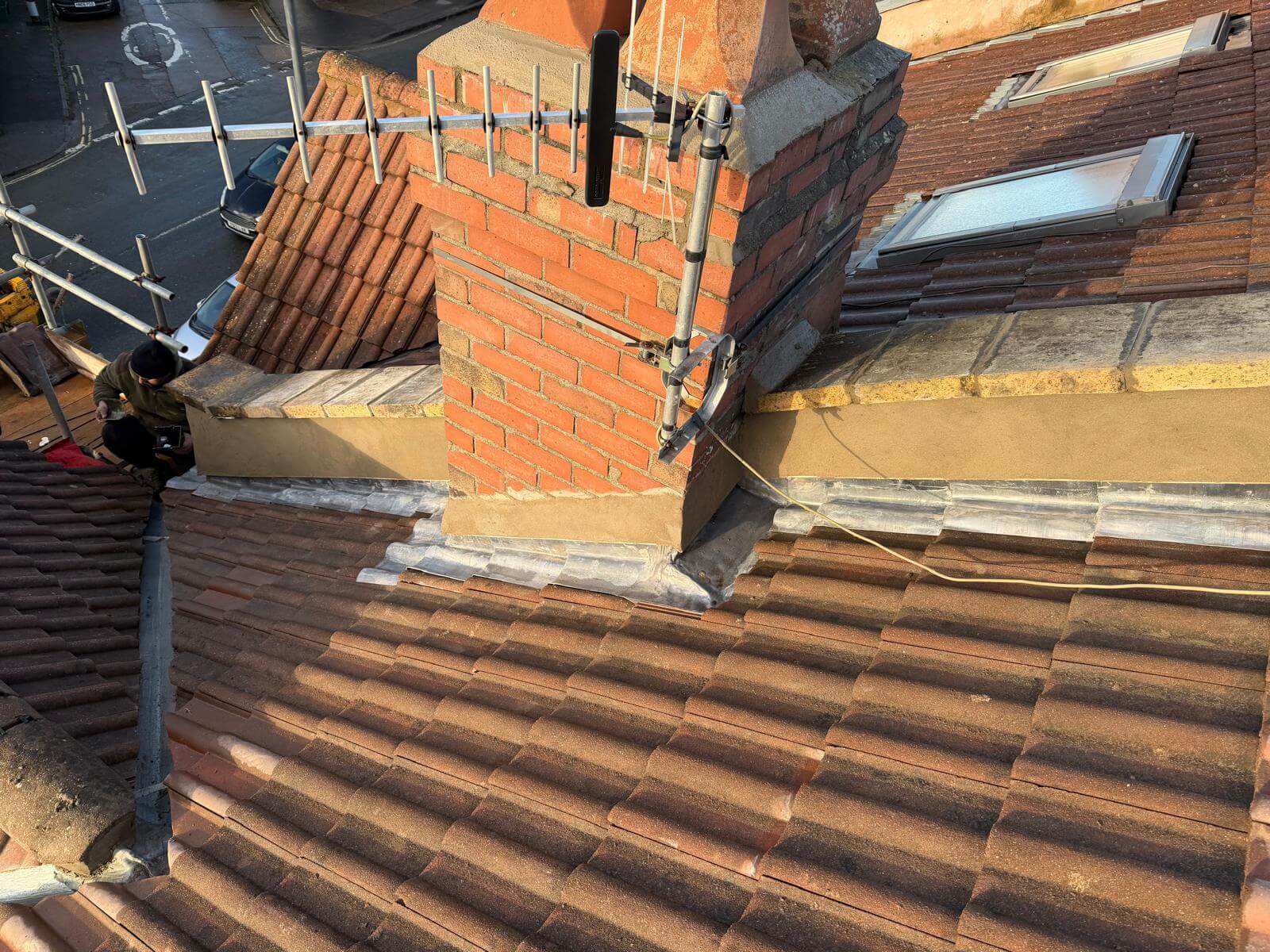
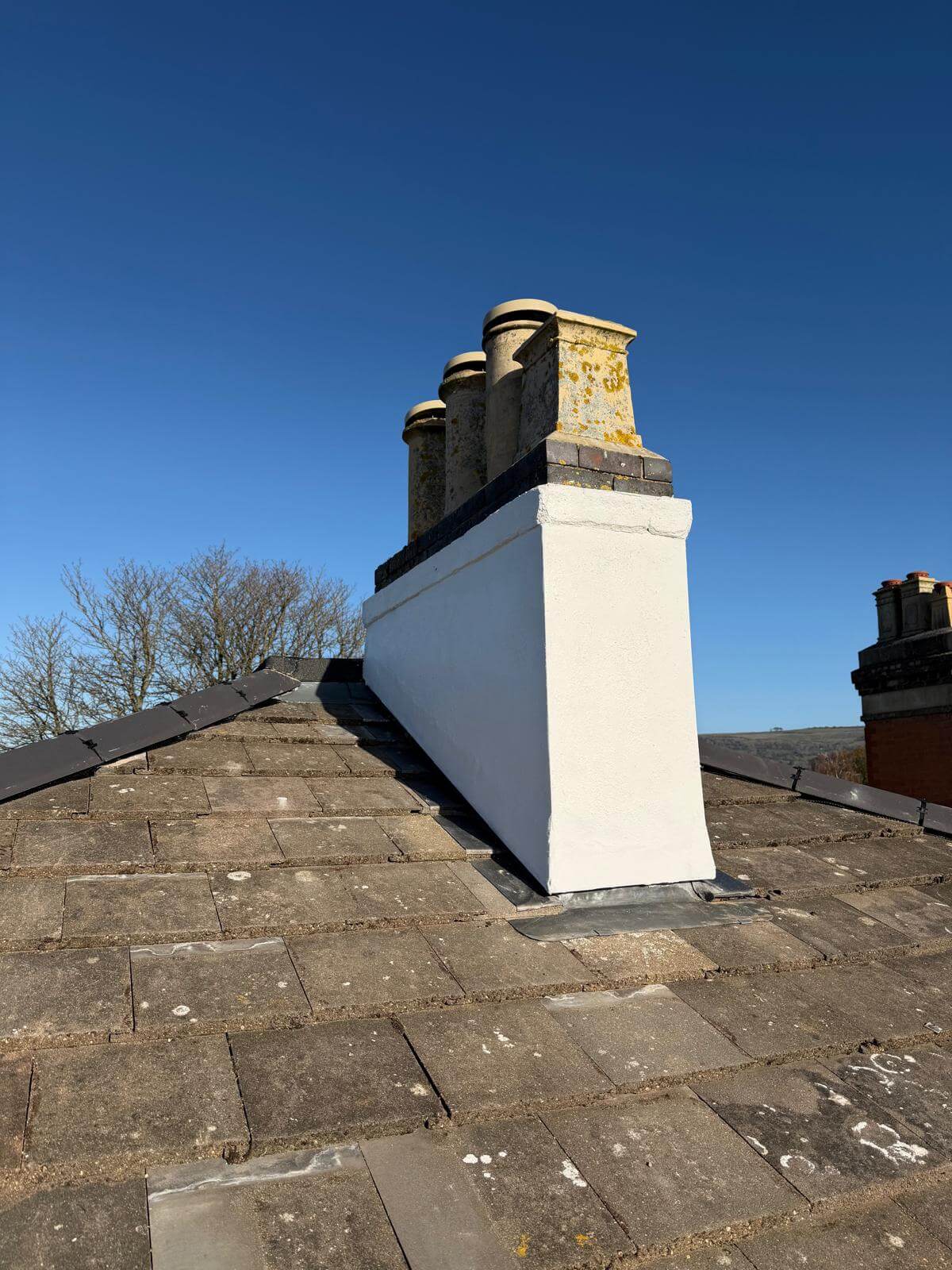
Code 4 step flashings and Code 5 cover flashings at all chimney abutments on Filton's post-war properties. On centrally positioned stacks where the chimney emerges from the main roof pitch, flashing is required on all four faces. On many Filton properties the flashing was applied by a building contractor rather than a specialist roofer — we frequently find silicone or mastic over original lead rather than properly dressed and wedged flashings.
Flaunching Repair and Replacement
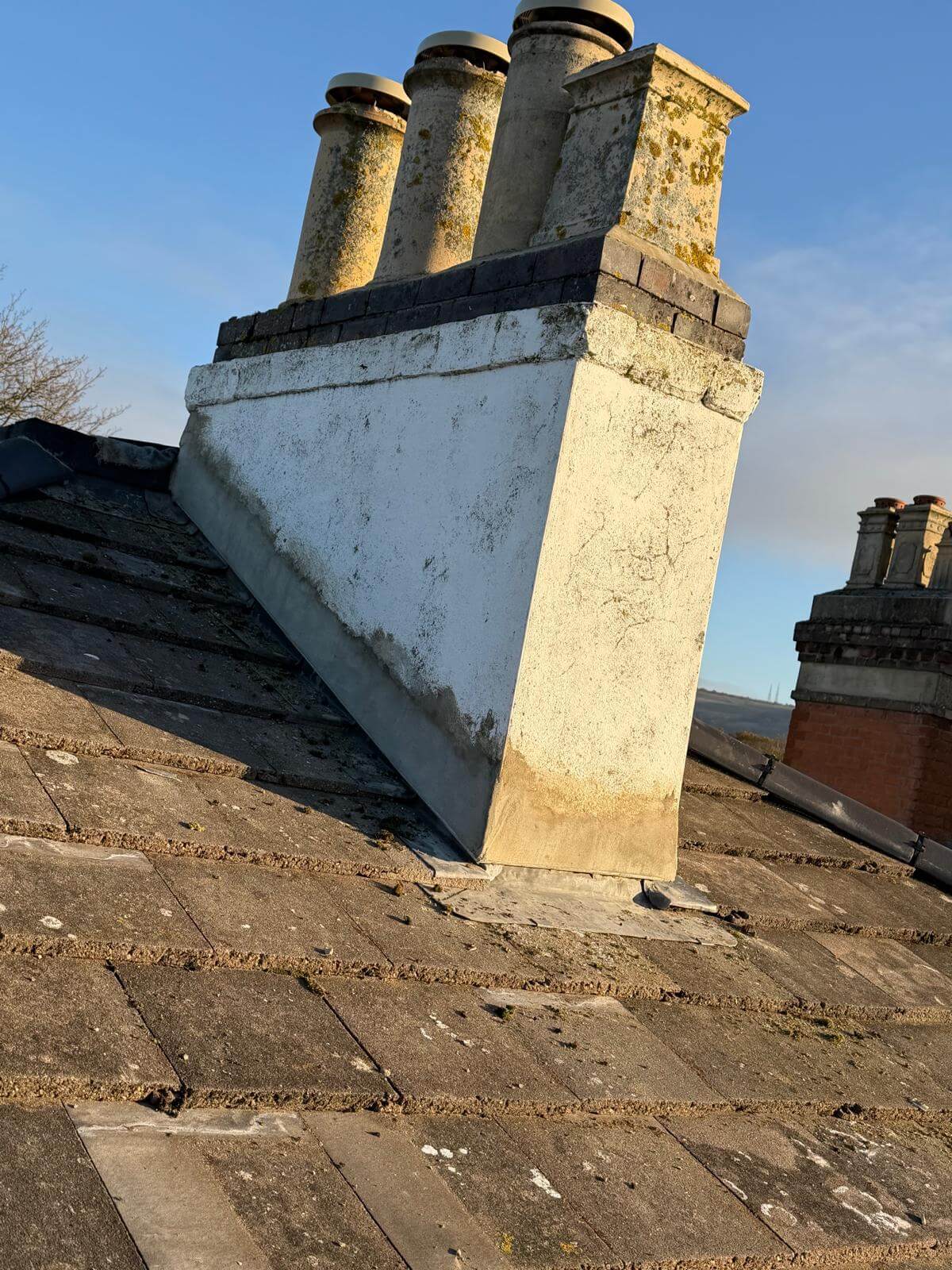
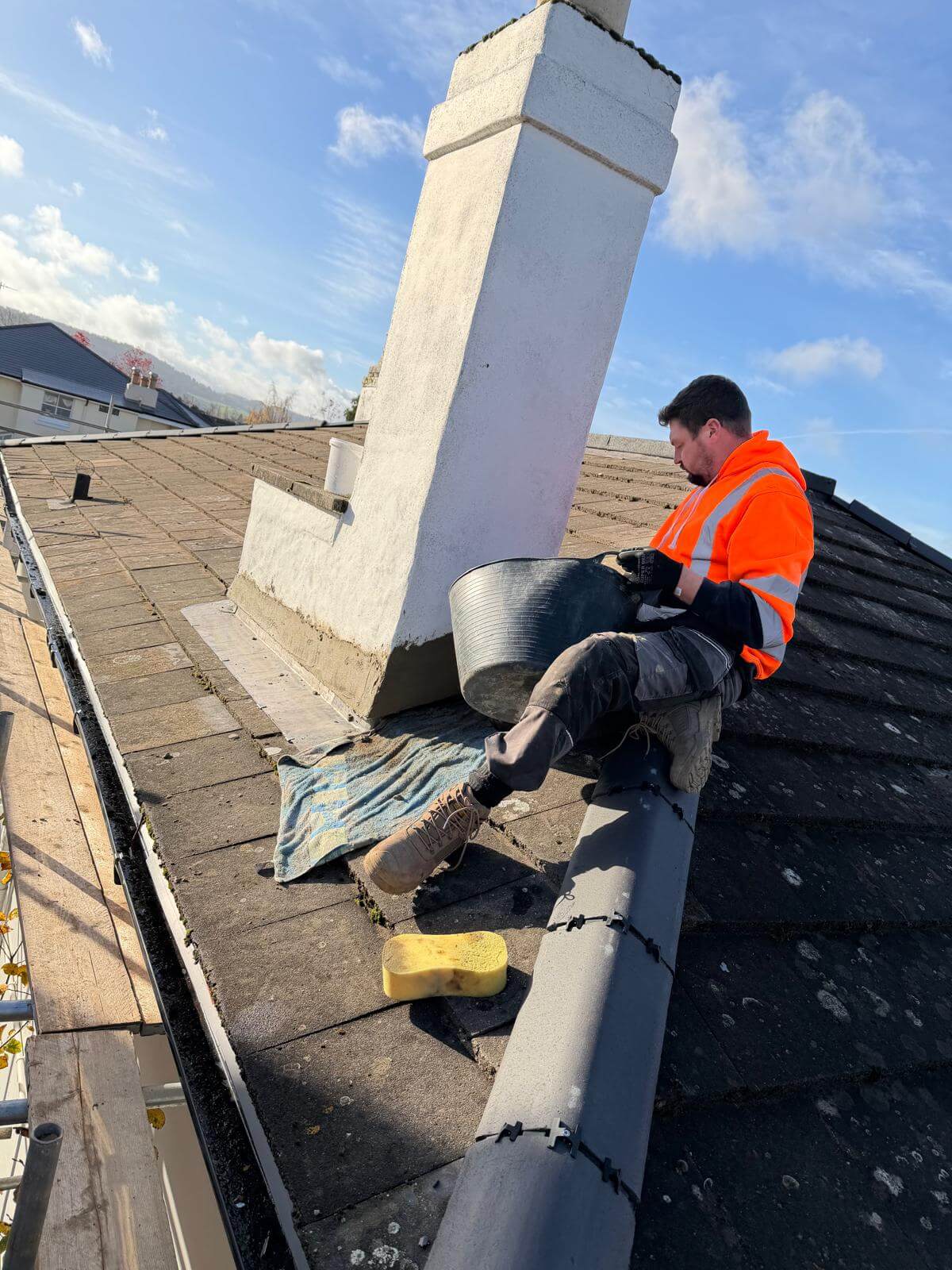
Standard maintenance requirement across Filton's post-war chimney stock. Cracked and deteriorating flaunching on shorter post-war stacks is often not visible from the ground — the drone survey identifies it before it reaches the pot instability stage.
Stack Removal
For Filton homeowners converting the loft space or carrying out significant internal reconfiguration — removing the external stack, closing the roof in matching tile, and sealing the flue at ground level. We advise on any structural implications of removing a load-bearing chimney breast element before any demolition work proceeds.
Emergency Chimney Repairs
Storm damage, chimney pot down, or sudden lead flashing failure — same-day emergency response across BS34.
My post-war Filton property has a damp patch on the chimney breast — what should I check first?
The chimney pot condition on the external stack. If the pot is open or has a mortar-sealed rather than ventilated cap, rain is entering the flue and saturating the flue lining from the top down. This is the most common cause of recurring chimney breast damp on BS34 post-war properties. Cap the flue correctly before commissioning any internal damp treatment.
I've been told my Filton property needs lime mortar repointing on the chimney — is that right?
It depends on the brick type. Lime mortar is essential on Victorian soft brick but not strictly required on the harder engineering brick used in Filton's post-war housing stock. We assess the specific brick before specifying any mortar — and we'll tell you honestly if lime mortar is the appropriate specification for your property or if standard modern mortar would perform equally well at lower cost.
My chimney stack is shorter than most I've seen — does it still need the same maintenance?
Yes. Shorter post-war stacks are still subject to the same mortar deterioration, flaunching failure, and flashing failure as taller Victorian stacks. They're also less visible from the ground, which means problems tend to develop further before anyone notices.
Do you offer same-day emergency callouts in Filton?
Yes. Call 0117 370 9986 for same-day response across BS34.
1. When was the fireplace blocked up?
If the answer is "sometime in the 1970s or 80s" — which covers the majority of Filton's post-war stock — and the stack hasn't been inspected since, a survey is due. Forty to fifty years of uninspected exposure is sufficient time for mortar, flaunching, and flashing deterioration to have developed.
2. What's on top of the chimney pot?
An open pot needs a ventilated cap. A mortar-sealed pot needs replacing with a ventilated cap. A proprietary cap that's more than 20 years old needs condition checking. If you can see the pot from the garden and it has no visible covering, rain is entering the flue.
3. Is there a damp patch on the chimney breast wall inside?
If yes — and internal damp treatment hasn't resolved it permanently — the external stack is the most likely cause. Our drone survey identifies the external failure point before we recommend any repair.
4. Has the chimney ever been repointed since the house was built?
If the answer is no — and on many of Filton's older council-built properties it is no — the original mortar is now 60 to 70 years old. A survey is worthwhile.
5. Are the ridge tiles near the chimney loose or moving?
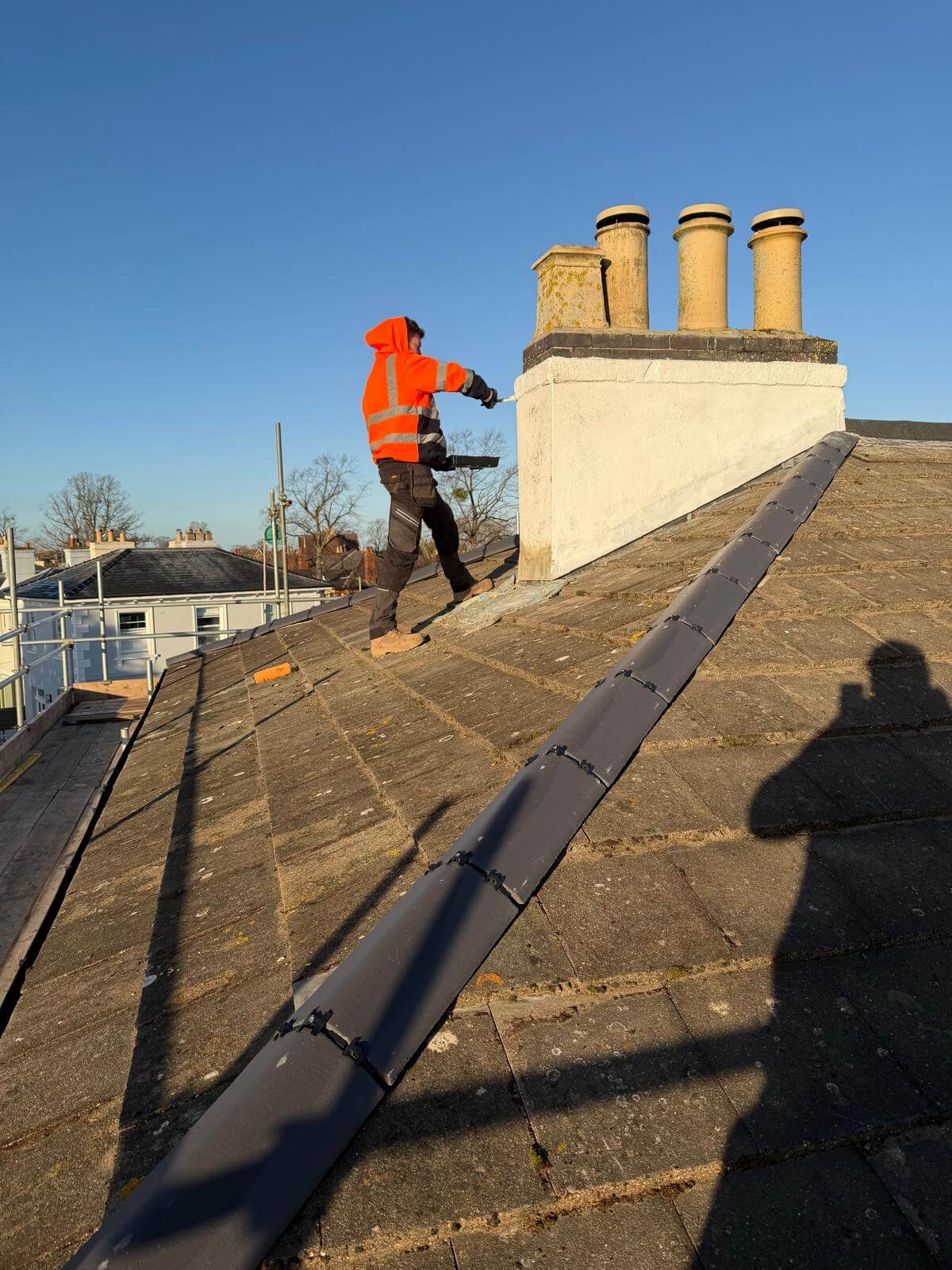
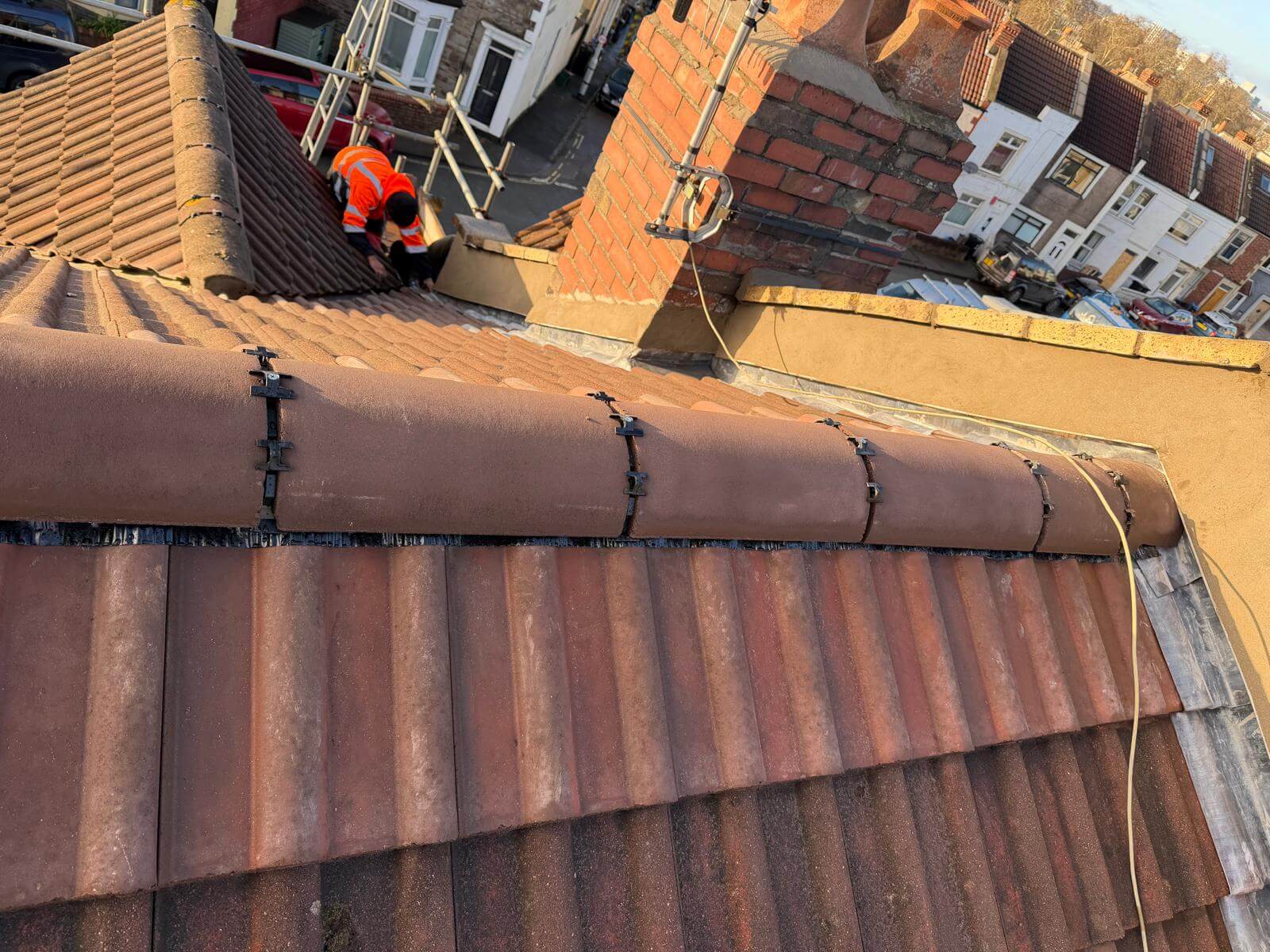
Loose ridge tiles at the chimney junction are often caused by failed lead flashing that has allowed water into the mortar bed beneath the ridge. They're a visible sign of a flashing failure that needs addressing before the next storm.

Post-war stack with open unused flue, recurring damp chimney breast, or a stack that's never been inspected? Call Thomas. Free drone survey, correct mortar specification assessed on-site, written quote, no obligation.
We don’t just "patch leaks." At TD Roofing we deliver engineered solutions specifically designed to withstand the high-velocity winds of the Severn Estuary. Every project is executed strictly to BS 5534 standards, ensuring your home has the maximum wind resistance and structural longevity required for the Bristol climate.


TD Roofing Contractors are your local roofing contractors in Bristol, providing 20+ years of expert service. From emergency roof repairs to new slate installations, we cover all BS postcodes with quality and integrity.
Copyright © 2026 TD Roofing Contractors LTD. All Rights Reserved.
Web Design by Tradesman Marketing Experts