
This is the most important technical aspect of any Filton new roof and the one most likely to result in a poor outcome if it's handled without proper survey.
Filton's post-war housing — particularly the 1950s and 1960s terraces and semis across the residential streets between Filton Avenue and Station Road — was built with roof pitches in the range of 17 to 28 degrees. This is at the lower end of the acceptable pitch range for concrete interlocking tile, the material originally specified on these properties.
Every concrete interlocking tile has a minimum pitch specification set by the manufacturer — below which the lap between adjacent tiles is insufficient to prevent wind-driven rain from being forced upward under the tile and through onto the underlay below. At pitches below approximately 22 degrees, the standard interlocking tile overlap is also insufficient without supplementary underfelt specification to handle the wind-driven rain that the tiles alone cannot exclude.
The consequence of specifying a standard concrete interlocking tile and standard breathable membrane on a Filton property with a 20-degree pitch is a new roof that performs adequately in still rainfall conditions but admits water through the tile laps in any significant westerly wind. This is one of the most common callbacks we attend on re-roofing work done by contractors who didn't measure the pitch before specifying.
We measure the actual pitch angle of every Filton property during the survey using a digital inclinometer — before specifying any tile or underlay. The pitch measurement determines the tile and underlay combination, not the other way around.


Low-Pitch Concrete Interlocking Tile Re-Roof — Correctly Specified
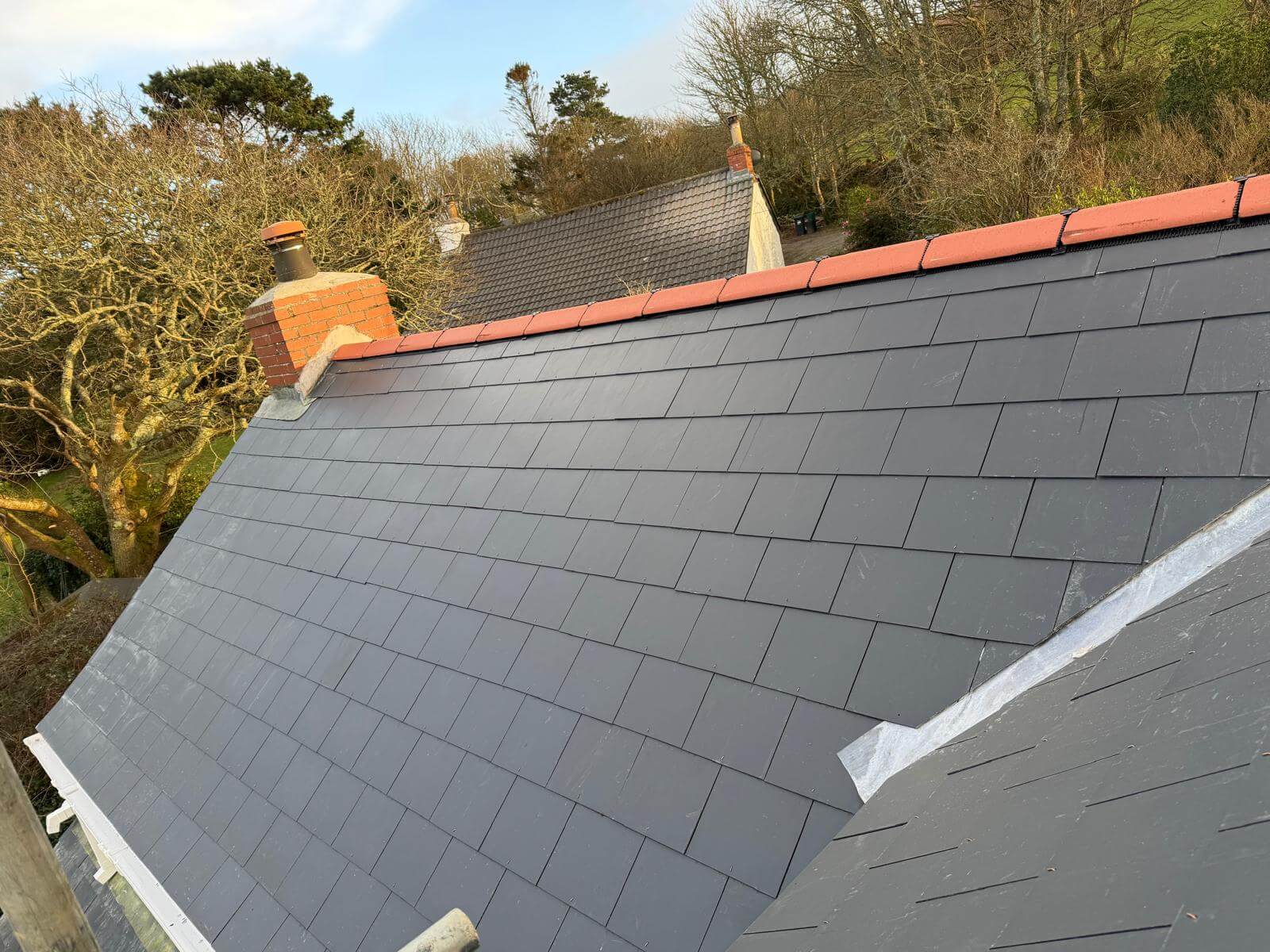
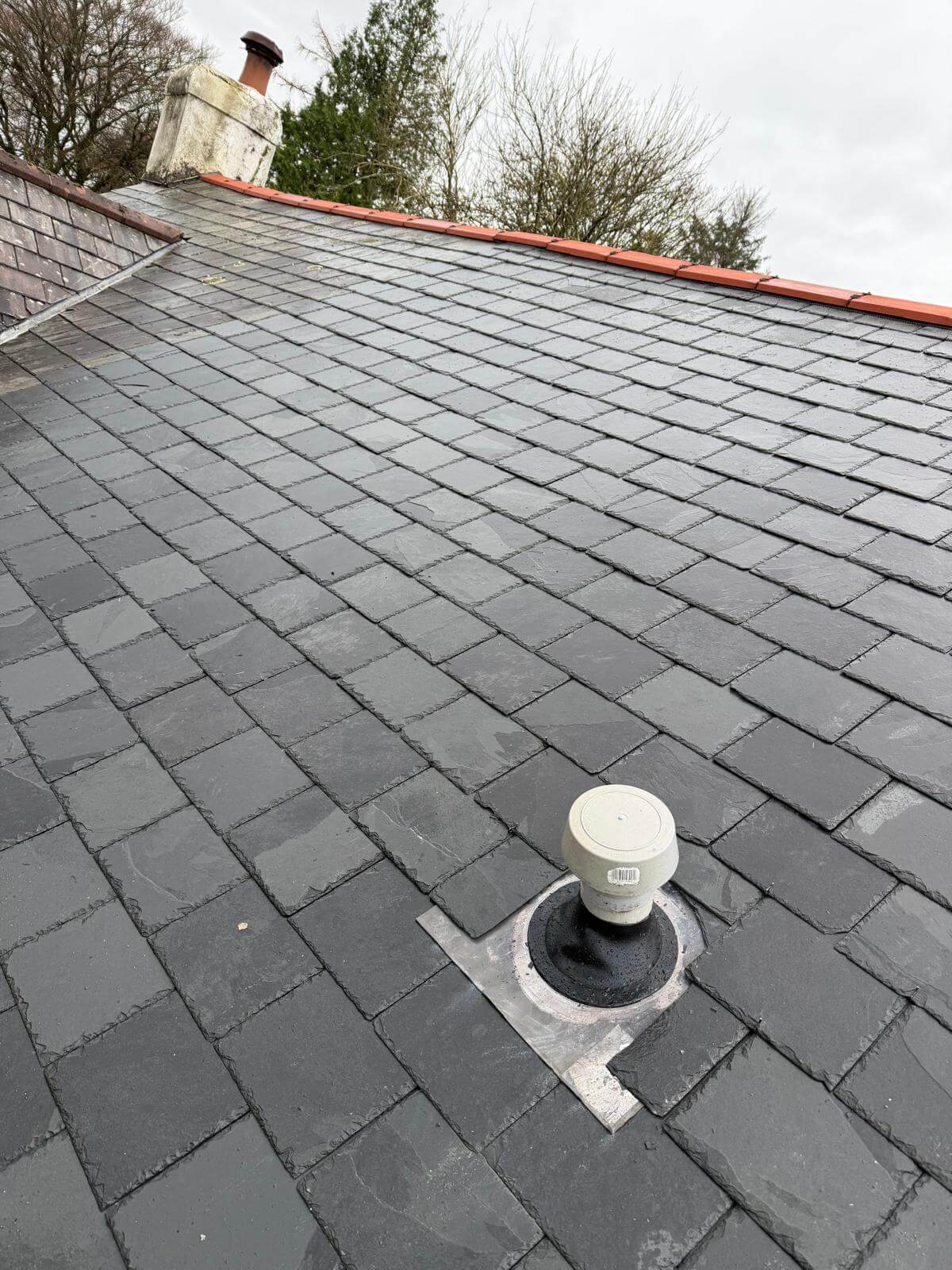
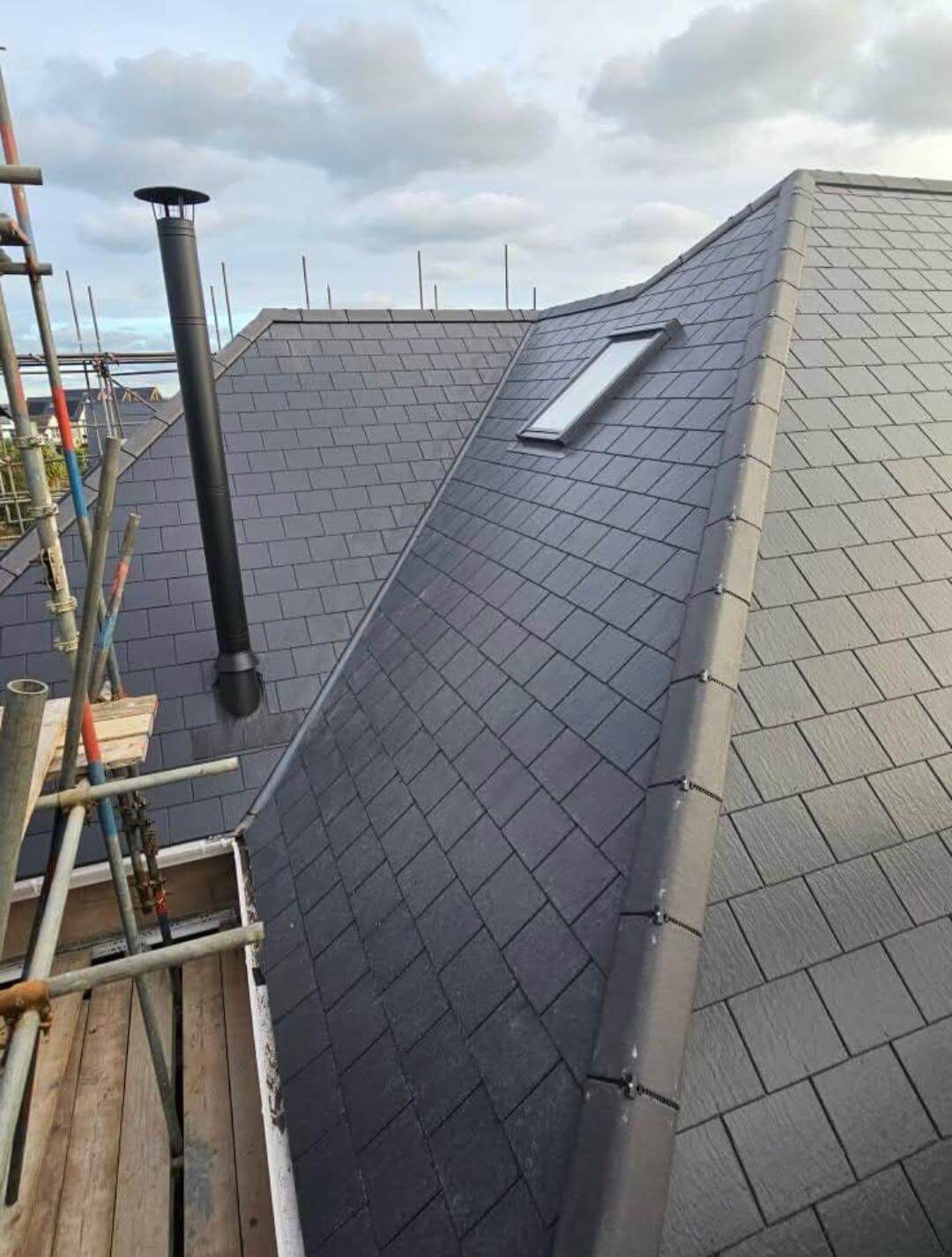
The core re-roofing service on Filton's post-war residential stock. Full strip of existing tile, felt, and battens; pitch measurement; tile selection matched to the actual pitch angle; underlay specification correct for the pitch and wind exposure; new treated timber battens at the correct gauge and spacing; dry ridge system at the apex; dry verge on gable ends. Every element specified for the specific property, not applied from a standard template.
Fibre Cement Tile Re-Roof
An alternative to concrete interlocking tile on Filton's post-war properties — lighter, with better low-pitch performance characteristics on some profiles, and available in a range of colours that closely match the original concrete tile profiles across BS34. We present fibre cement as an option where the specific pitch angle benefits from its performance characteristics.
Flat Garage Roof Recovery — EPDM Rubber
Universal requirement across BS34's post-war housing stock. We recover flat garage roofs in cold-applied EPDM rubber — 20-year material warranty, no naked flame near timber structure, correct drainage fall specification. The simultaneous recovery with the main re-roof while scaffold is in position produces the most cost-effective overall project.
Fascia, Soffit, and Gutter Package
The original uPVC fascias and guttering on Filton's oldest post-war properties are now 40 to 50 years old — at or past their practical life. Combining fascia, soffit, and gutter replacement with the main re-roof in a single scaffold mobilisation is consistently the most cost-effective approach on BS34 properties where all three elements need attention simultaneously.
Full Underlay and Batten Replacement
Where the existing concrete tile is being retained but the original 1960s bitumen felt underlay beneath it has failed — a common situation on Filton properties where tiles are still serviceable but the underlay has disintegrated — we carry out a full strip and re-batten with new breathable membrane and correct tile refixing. This restores the weather performance of the roof without the full material cost of new tiles where the existing ones are still sound.
This is a decision point specific to Filton's older post-war stock that comes up regularly and that we want to be transparent about.
On some Filton properties — particularly those built in the 1950s and early 1960s — the concrete interlocking tiles themselves are in reasonable condition. The surface hasn't significantly delaminated, the breakage rate is low, and the tile profile is still performing its primary weather-shedding function. What has failed is the original bitumen felt underlay beneath them — which has become brittle, torn, and in some cases completely disintegrated. Water is getting through the roof not through the tiles but through gaps in a failed underlay below them.
In this situation, a full re-roof in new tiles is more expensive than necessary. The correct repair is a full strip — removing the tiles carefully, renewing the battens and breathable membrane, and relaying the existing tiles at the correct gauge and fall. This restores the roof to full performance at a significantly lower material cost than new tiles.
We identify this situation during the drone survey and flag it clearly in the quote as a specific option. We never recommend new tiles where a batten-and-membrane renewal would resolve the performance issue at lower cost.
For BS34 homeowners comparing tile options for a re-roof, here's a straightforward guide to the pitch constraints:
Above 22.5 degrees — standard concrete interlocking tile with standard breathable underlay is appropriate. Most Filton properties built in the 1960s on slightly steeper ground fall into this range. The widest tile choice available.
17 to 22 degrees — requires either a tile with a specific low-pitch approval rating, or a standard tile installed at a reduced gauge with high-performance underlay rated for low-pitch application. Not every concrete tile is approved for this pitch range. We specify only tiles with manufacturer low-pitch approval for properties in this range.
Below 17 degrees — concrete and clay interlocking tile is not appropriate at this pitch. Flat-profile tile or a different roofing system is required. Filton properties at this pitch angle are less common but not unknown — particularly on some of the later 1970s development.
We measure every pitch angle on every Filton survey. The measurement determines the specification. This is not negotiable on a property where the pitch genuinely limits the tile options — and it's a conversation we have clearly before quoting.

Low-pitched post-war concrete tile roof, suspected underlay failure, flat garage at end of life, or a full package assessment needed? Call Thomas. Free 4K drone survey with pitch measurement included, fully itemised written quote with tile and underlay specification for your actual pitch angle.

We don’t just "patch leaks." At TD Roofing we deliver engineered solutions specifically designed to withstand the high-velocity winds of the Severn Estuary. Every project is executed strictly to BS 5534 standards, ensuring your home has the maximum wind resistance and structural longevity required for the Bristol climate.


TD Roofing Contractors are your local roofing contractors in Bristol, providing 20+ years of expert service. From emergency roof repairs to new slate installations, we cover all BS postcodes with quality and integrity.
Copyright © 2026 TD Roofing Contractors LTD. All Rights Reserved.
Web Design by Tradesman Marketing Experts