
This is the starting point for every Staple Hill chimney repair enquiry — and it's a question that most homeowners haven't considered. The correct mortar specification for a chimney repair on a Victorian soft brick terrace near Staple Hill High Street is genuinely different to the correct specification on a harder brick 1930s interwar semi on Soundwell Road, which is different again to the basic post-war central stack on a council-built terrace in the wider BS16 estate streets.
Using the wrong mortar on the wrong property doesn't look wrong immediately. It looks right for two to five winters — until the thermal cycling cracks the joints, moisture tracks in behind the joint face, and the brickwork begins to deteriorate from within. On Victorian soft brick, Portland cement causes spalling damage that's irreversible without brick replacement. On interwar or post-war harder brick, the consequences are less severe but the principle is the same — correct specification from the start costs less in the long run than correcting incorrect specification later.
We establish the property type and brick age during the drone survey before specifying any mortar, and we explain the specification decision to every Staple Hill homeowner before a repair is carried out.


Lime Mortar Repointing — Victorian High Street Terraces
The Victorian terrace stock near Staple Hill High Street, Seymour Road, and Forest Road has soft brick that demands lime mortar. We cut out all failed and cement-contaminated joints and repoint in the correct lime mortar specification. Never Portland cement on pre-1920 brickwork.
Standard Mortar Repointing — Interwar and Post-War Stock
The harder brick on Staple Hill's interwar semis and post-war terraces is compatible with lime mortar — which we use as standard — though the critical requirement for soft brick specification is less absolute. We assess and specify accordingly on a property-by-property basis.
Ventilated Flue Capping
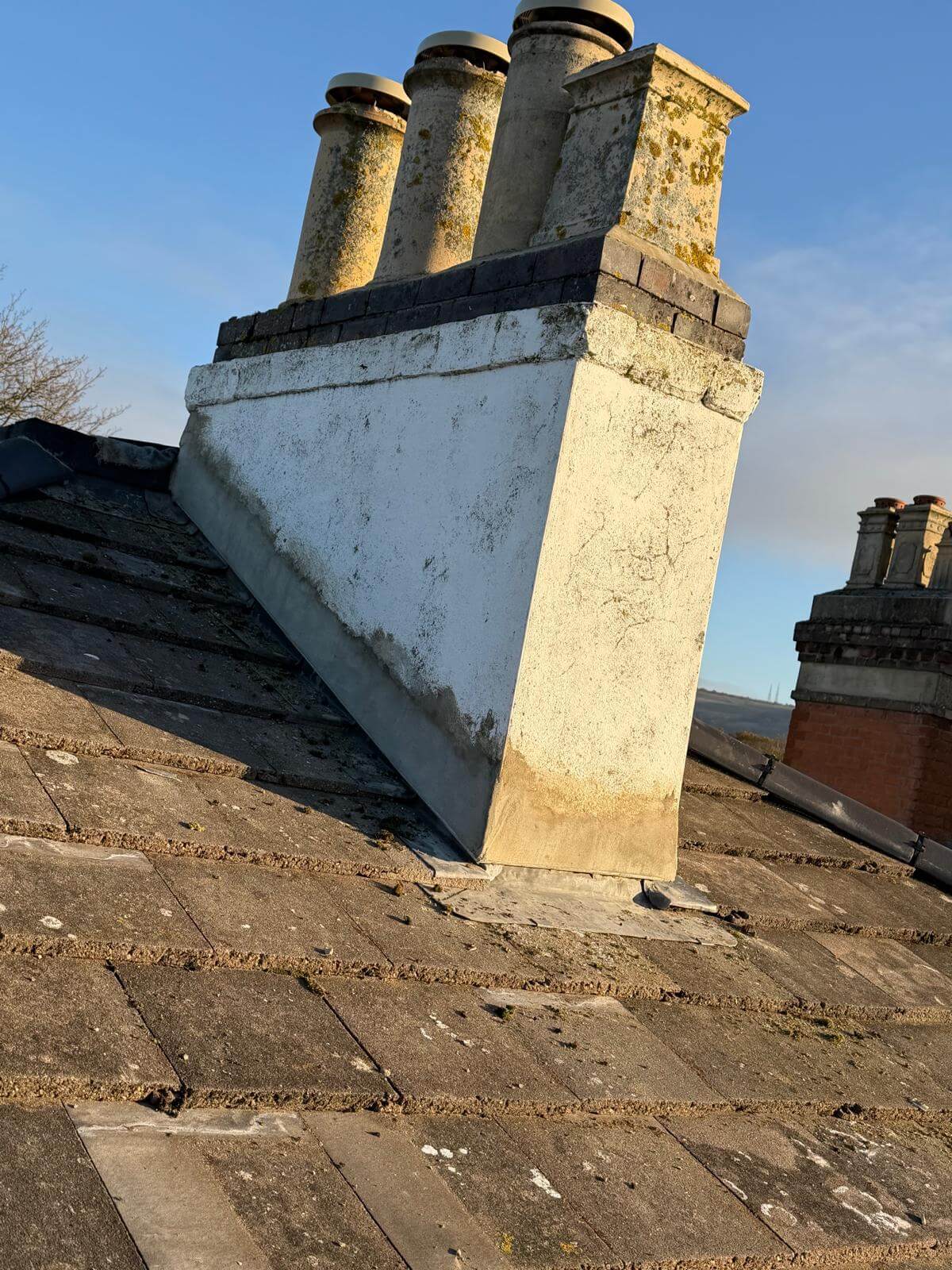
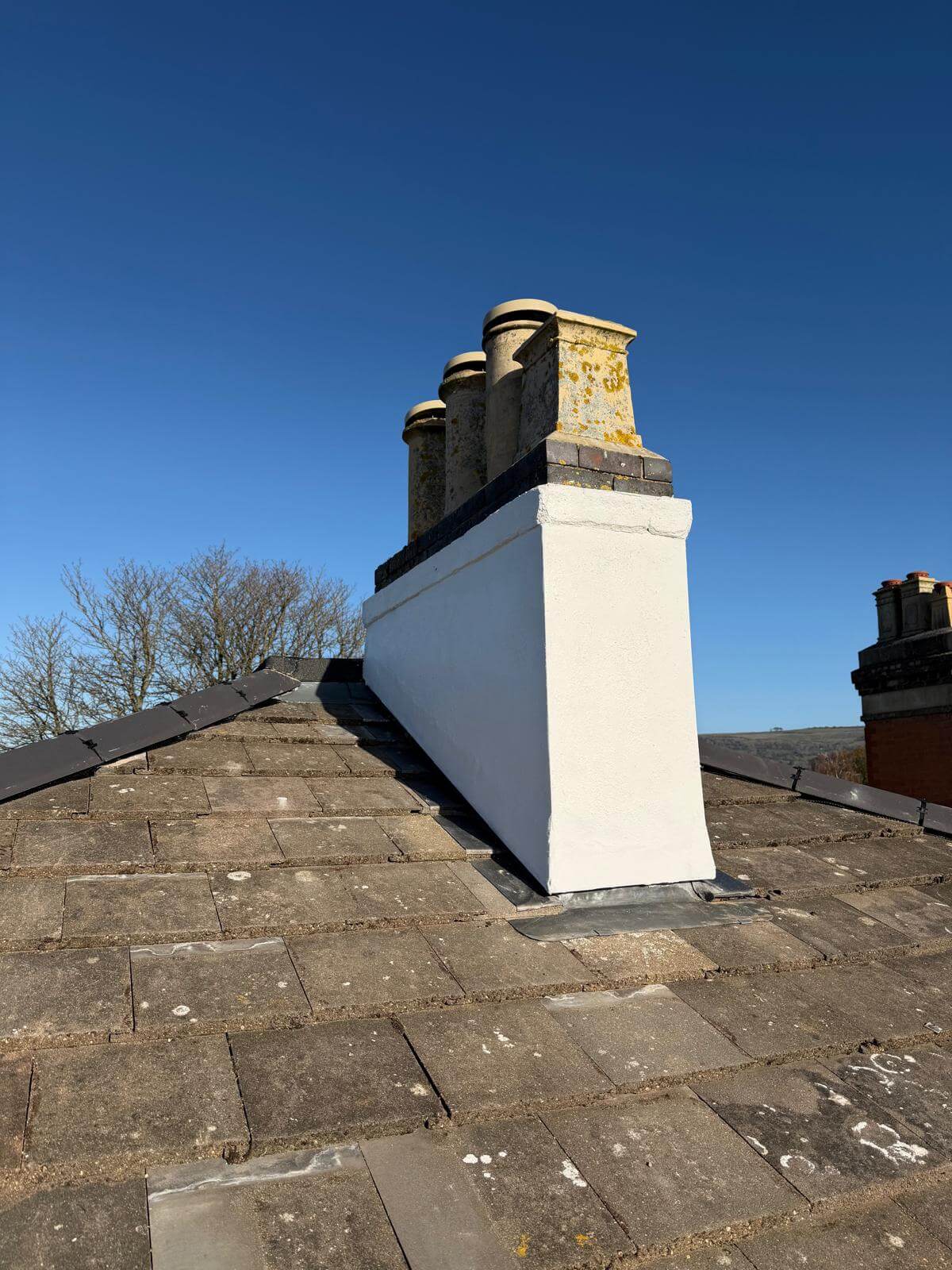
A priority repair on every Staple Hill property with open unused chimney pots. We fit ventilated caps that exclude rain and wildlife while maintaining the airflow through the flue that prevents condensation damage to the internal flue lining.
Lead Flashing Repair and Replacement
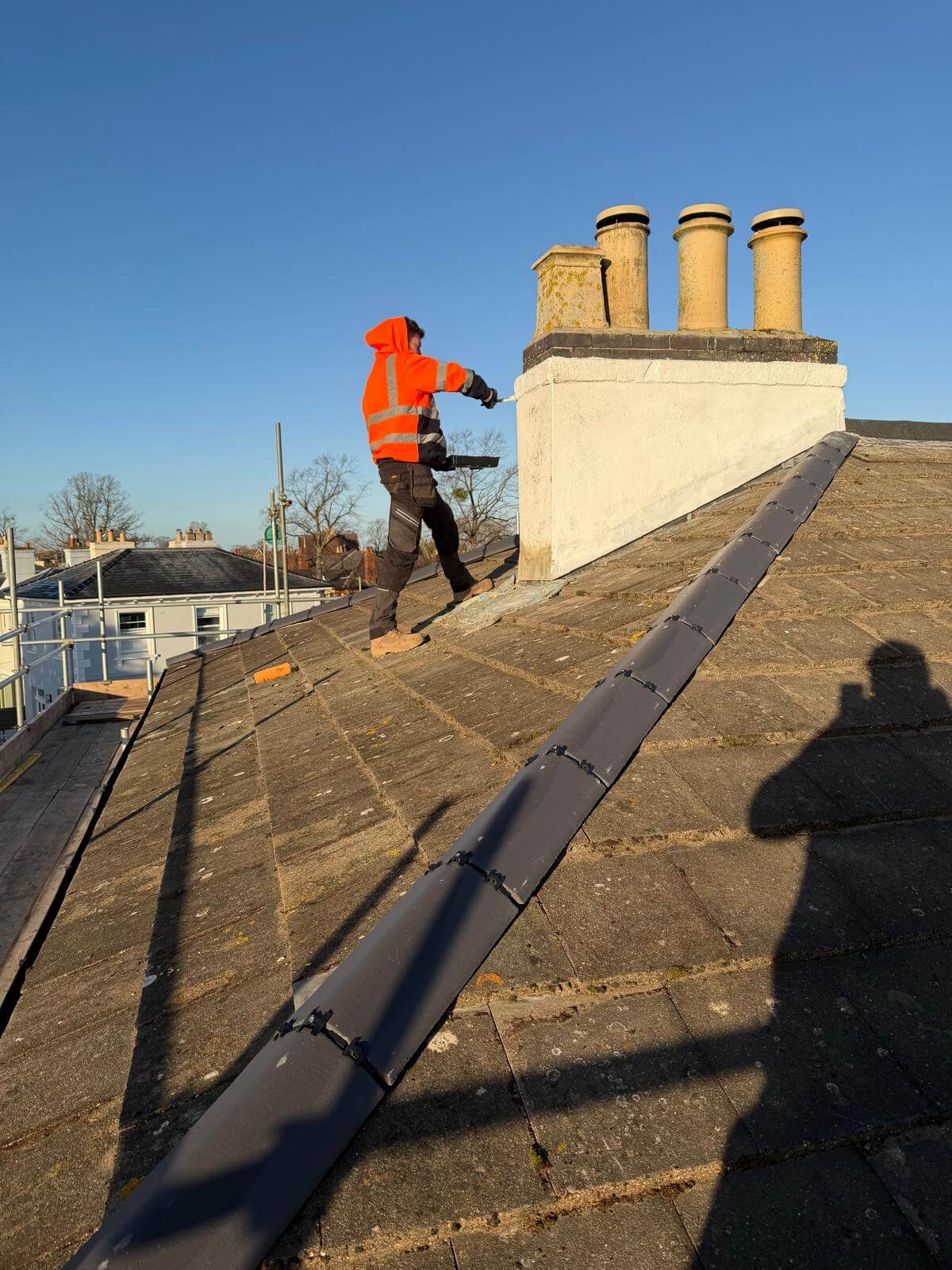
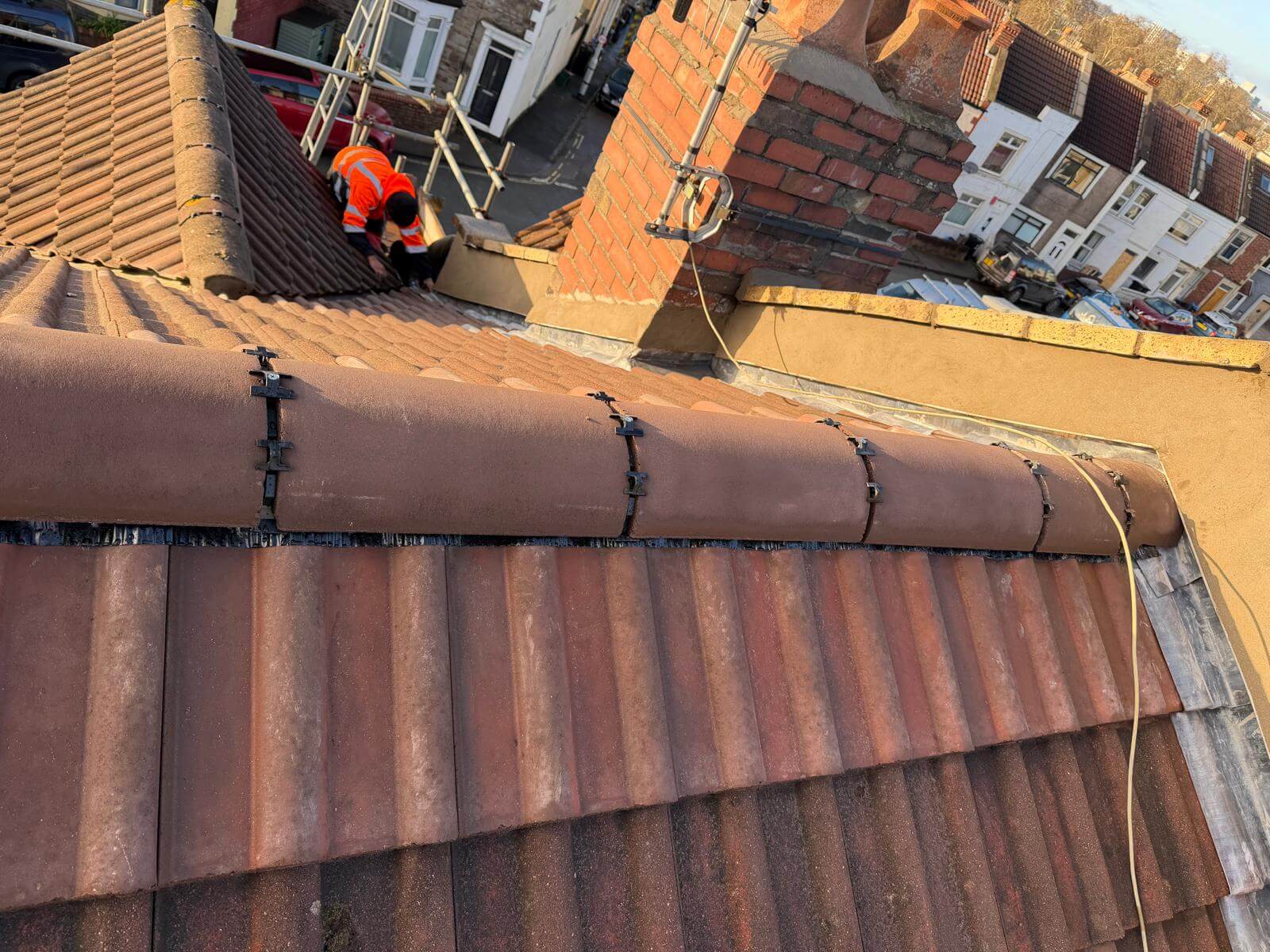
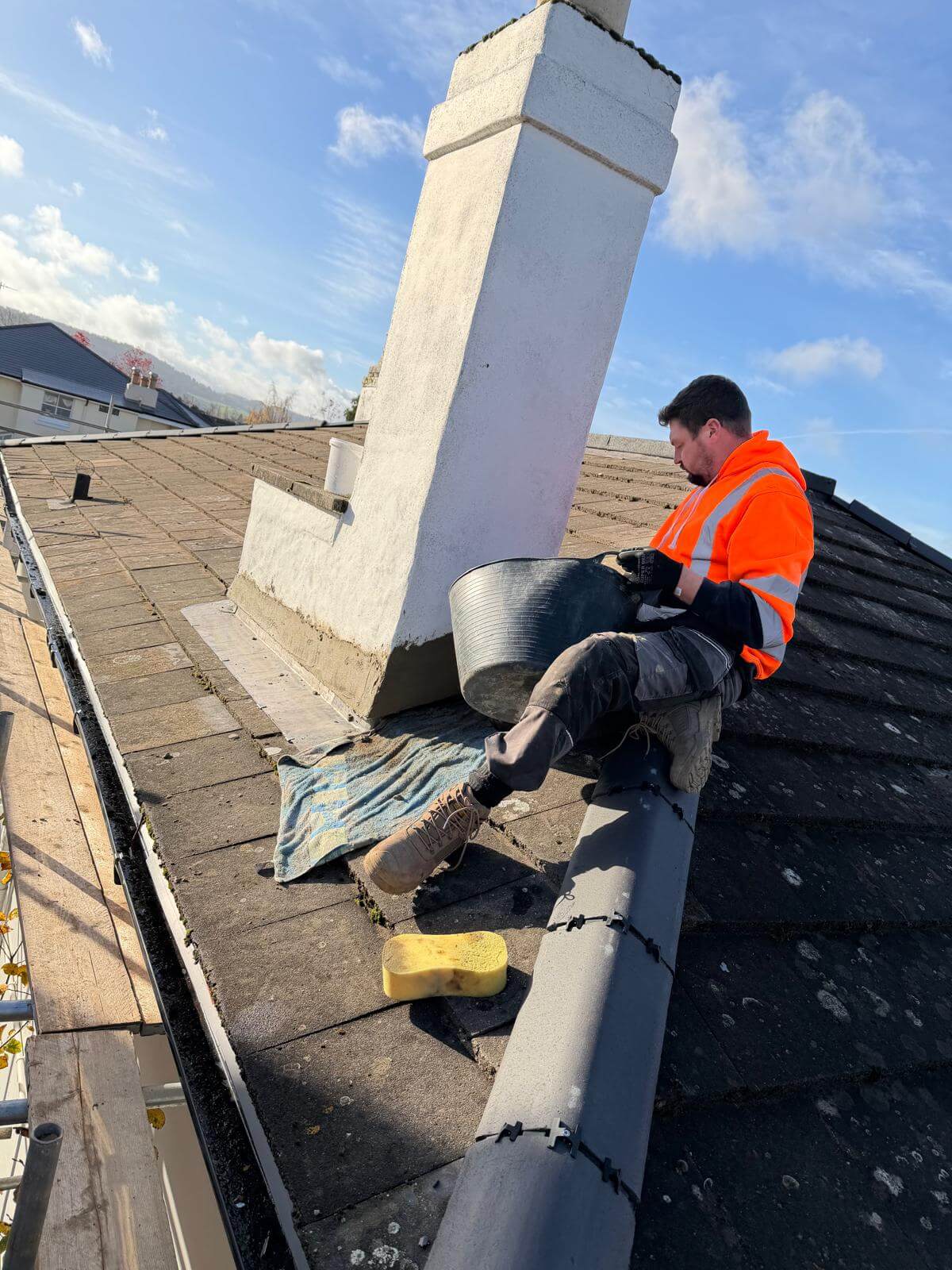
Code 4 step flashings and Code 5 cover flashings at all chimney abutments, correctly dressed and wedged into the mortar joint. On post-war Staple Hill properties where the chimney stack is centrally positioned, flashing is required on all four faces of the stack junction with the main roof slope.
Flaunching Repair and Replacement
Cracked and deteriorated flaunching is a consistent finding across all three of Staple Hill's property types. We replace in waterproof mortar correctly formed to crown away from the pot base and flue opening.
Stack Removal for Loft Conversions
Loft conversions are increasingly common across Staple Hill's Victorian and interwar stock as owners extend upward into the roof void. Where the chimney stack passes through the planned conversion space, we remove the external section, close the roof opening in matched material, and seal the flue internally. Party Wall Act advice provided where the stack is shared.
Here's the chimney maintenance issue that affects more Staple Hill properties than any other and costs more homeowners more money through misdiagnosed damp treatment than any other individual roofing problem.
When coal-fired heating was phased out across BS16's residential stock during the 1970s and 1980s, the standard approach was to block up the fireplace opening internally and leave the chimney stack intact externally. In many properties the chimney pot was left open. In others a basic cap was fitted — sometimes a terracotta pot cap, sometimes a proprietary fitting that has since degraded. In either case, the result 40 to 50 years later is a chimney that is admitting rain through the flue aperture, saturating the internal flue lining, and causing recurring damp on the chimney breast wall inside the property.
The damp appears on the chimney breast wallpaper or plaster — typically in an upstairs bedroom or on the ground floor in the room where the fireplace was blocked. It's treated internally — plaster stripped, damp-proof paint applied, replastered — and returns every winter because the external ingress point was never closed. A ventilated chimney cap on the open pot costs a fraction of repeated internal damp treatment cycles. It also permanently closes the ingress point.
On every Staple Hill chimney survey, we check the status of all chimney flue pots — open, capped, or ventilated — and flag any that are admitting rain before we discuss any other element of the repair.
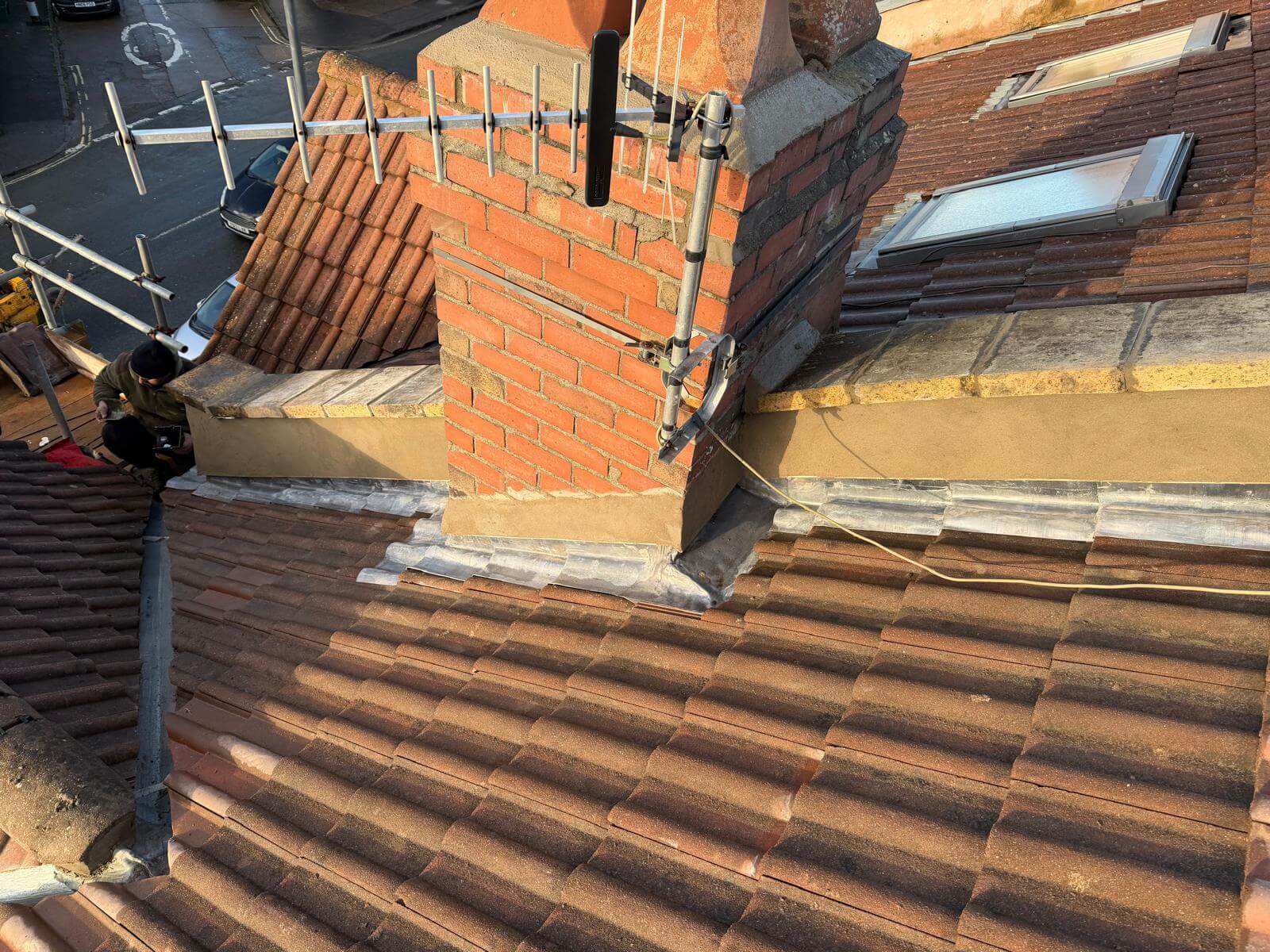
Rather than a generic list of chimney problems, here are the five specific indicators we ask about when a Staple Hill homeowner calls us — because each one points to a different repair need:
Damp patch on the chimney breast wall inside the property — most likely an open or inadequately capped flue pot admitting rain. Check the external pot before commissioning internal damp treatment.
Mortar debris collecting in the blocked fireplace or at the base of the chimney breast — mortar is physically falling from deteriorated joints in the upper stack. This is a priority inspection — if mortar is falling, chimney pot stability is the next concern.
White crystalline deposits (efflorescence) on wallpaper or plaster near the chimney breast — salt deposits drawn out by water movement through the brickwork. Water is entering externally and tracking through the chimney breast wall. The external entry point needs identifying.
Chimney pot that visibly rocks when you can see it in high wind — failed flaunching. The pot seating has deteriorated and the pot is no longer stable. Address before the next significant storm.
Staining on the external wall below the chimney stack — water is overflowing at some point on the stack and running down the wall face. Either the flaunching has failed and allows rain directly into the stack, or a lead flashing is lifted and discharging water down the wall.

Recurring damp chimney breast, open unused flue, or a stack you haven't looked at in years? Call Thomas. Free drone survey, mortar type identified and specified correctly, written quote, no obligation.
We don’t just "patch leaks." At TD Roofing we deliver engineered solutions specifically designed to withstand the high-velocity winds of the Severn Estuary. Every project is executed strictly to BS 5534 standards, ensuring your home has the maximum wind resistance and structural longevity required for the Bristol climate.


TD Roofing Contractors are your local roofing contractors in Bristol, providing 20+ years of expert service. From emergency roof repairs to new slate installations, we cover all BS postcodes with quality and integrity.
Copyright © 2026 TD Roofing Contractors LTD. All Rights Reserved.
Web Design by Tradesman Marketing Experts