
Stand at the top of Regent Street and look north across Kingswood's roofline. The older Victorian terraces closest to the town centre have the characteristic chimney profiles of the period — twin stacks, soft red brick, wrought iron nail fixings, and a mortar history that in many cases includes several layers of incorrect cement repointing applied over the original lime joints.
Drive five minutes east toward Warmley or south toward Cadbury Heath and the picture changes entirely. The post-war semis and council-built terraces of BS15's outer residential streets have shorter, simpler central stacks — often a single flue above a blocked-up fireplace that hasn't been used since central heating arrived in the 1970s. The mortar on these stacks is typically original — or was last pointed by the council before right-to-buy — and in many cases hasn't been touched since.
Both types of stack fail. They fail for the same underlying reasons — deteriorated mortar, failed lead flashing, cracked flaunching. But the correct repair specification differs between them in ways that matter. Lime mortar on the Victorian soft brick. Standard cement mortar permissible on the harder post-war brick. Different lead flashing configurations at different stack sizes. Different chimney pot profiles.
We work on both across Kingswood every week. The survey always starts by establishing which situation you're dealing with.


Lime Mortar Repointing — Victorian Terrace Stock
The Victorian terraces around Regent Street, Moravian Road, and the older Kingswood town centre streets have soft brick that demands lime mortar. We cut out all failed or cement-contaminated joints and repoint correctly in lime mortar specification. The difference between lime and cement on Victorian soft brick isn't cosmetic — cement causes progressive brick spalling that lime prevents.
Standard Repointing — Post-War and Council Properties
The harder brick used in Kingswood's post-war and council-built stock is compatible with modern lime mortar but doesn't strictly require it the way Victorian soft brick does. We specify the appropriate mortar for each property type after assessing the brick age and hardness during the survey — not a blanket approach applied regardless of what we're working on.
Lead Flashing Repair and Replacement
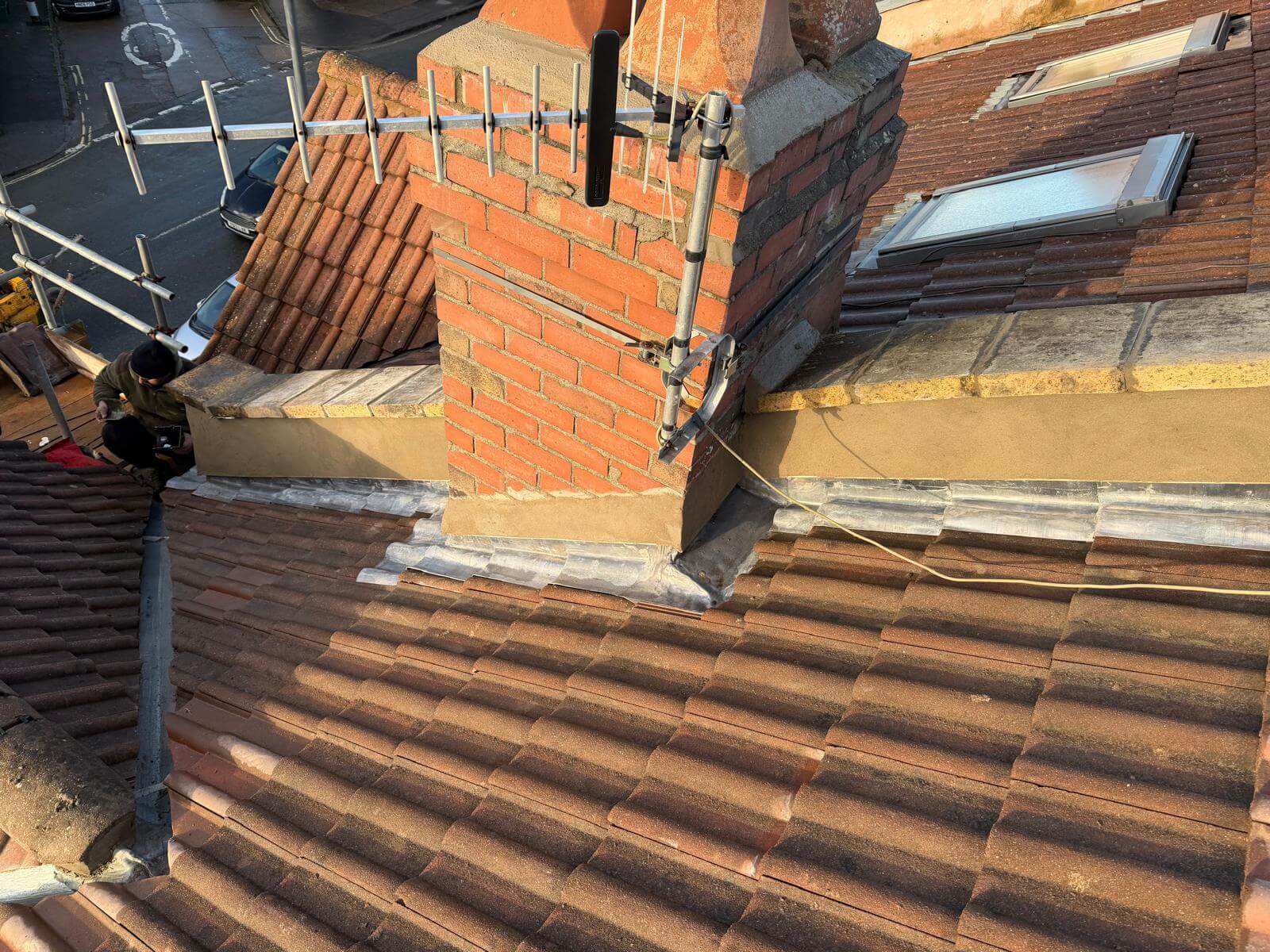
Code 4 step flashings and Code 5 cover flashings at chimney abutments, correctly dressed and wedged into the mortar joint. On Kingswood's post-war semis, the chimney stack is often centrally positioned at the ridge — requiring flashing on all four faces where the stack emerges from the main roof pitch. On Victorian terraces, the stack typically rises from the party wall and requires step flashings on the sloping faces and a back gutter detail where the stack sits upslope of the roof.
Flaunching Repair and Replacement
The mortar crown holding chimney pots in place on BS15 properties deteriorates predictably over time — particularly on post-war stacks where the original flaunching was laid to a thin specification. We replace in waterproof mortar correctly formed and crowned to shed water away from the pot base.
Unused Flue Capping
The majority of Kingswood's post-war and council-built properties have had their coal fireplaces removed and the flues left open at the chimney pot. Open flues admit rain directly into the flue chamber, which saturates the internal chimney breast and causes damp on the chimney breast wall inside — a very common finding on right-to-buy properties where the open flue has never been addressed. We fit ventilated caps that exclude rain and wildlife while maintaining the air circulation needed to prevent condensation damage.
Emergency Storm Damage Repairs
Chimney pots down, stacks damaged, or lead flashing lifted after high winds — same-day emergency callouts across BS15. We make the chimney safe, document the damage photographically for insurance purposes, and provide a written report on request.
Every chimney survey in Kingswood starts with a 4K drone inspection. You see the footage from the survey — stack condition on every face, flaunching, chimney pot, lead flashing junction — before we discuss any repair or quote any cost. This isn't a courtesy. It's the only reliable way to assess a chimney stack accurately on any BS15 property above single-storey height.
We produce a written quote following the survey that specifies every element of the proposed repair — mortar type, lead code, flaunching specification, pot type — so you know exactly what's being done and can compare it properly with any other quote you receive.
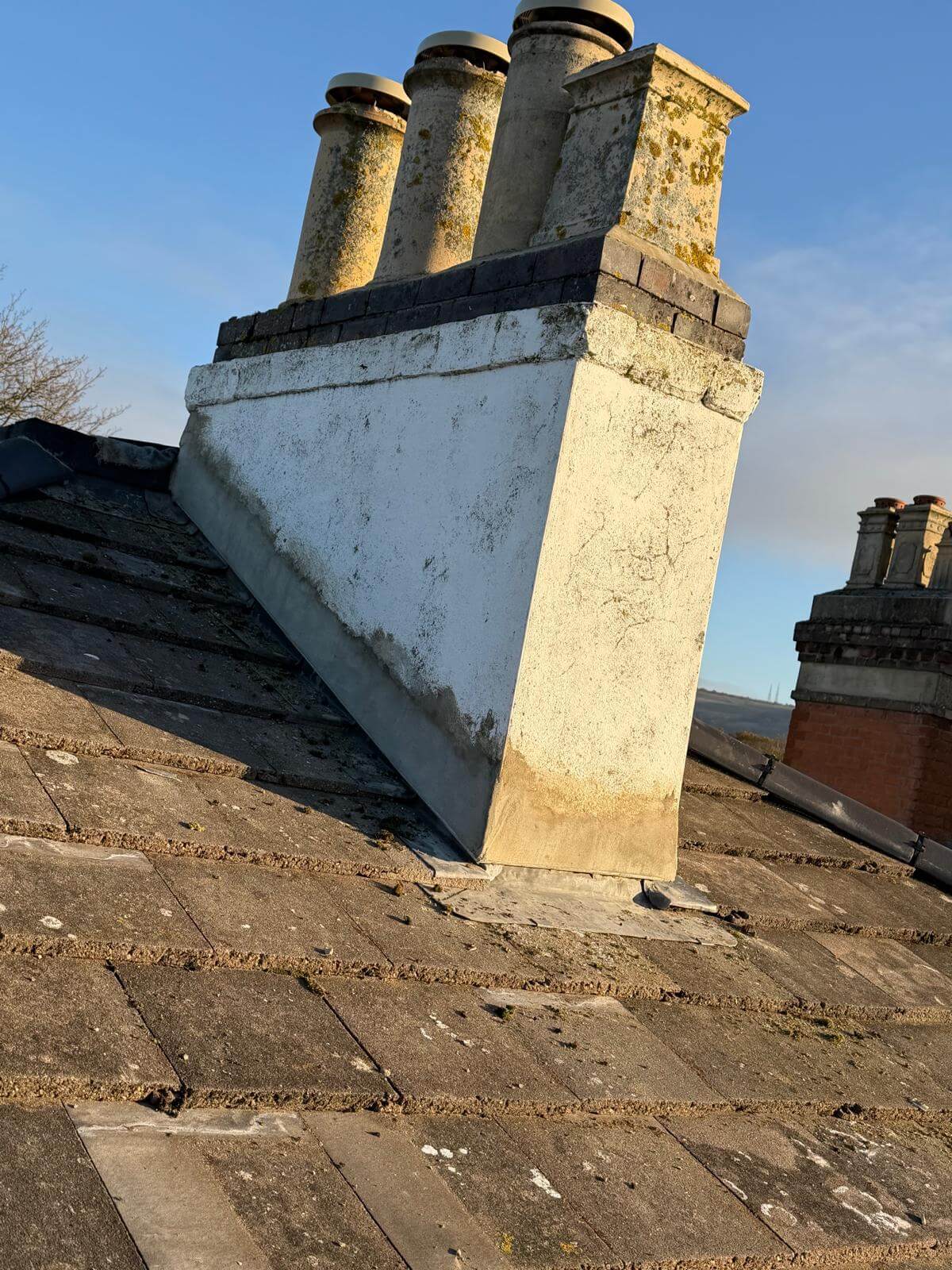
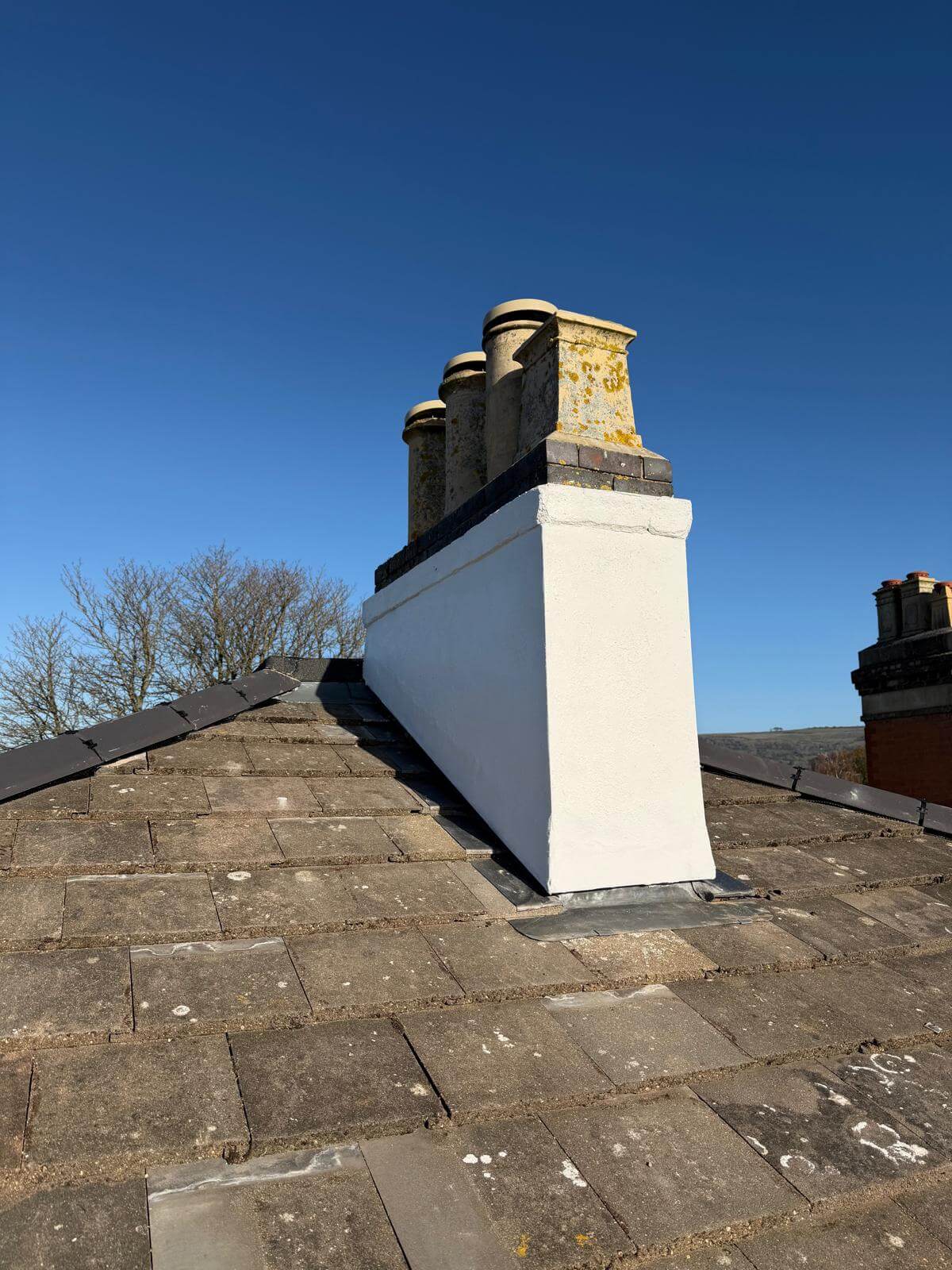
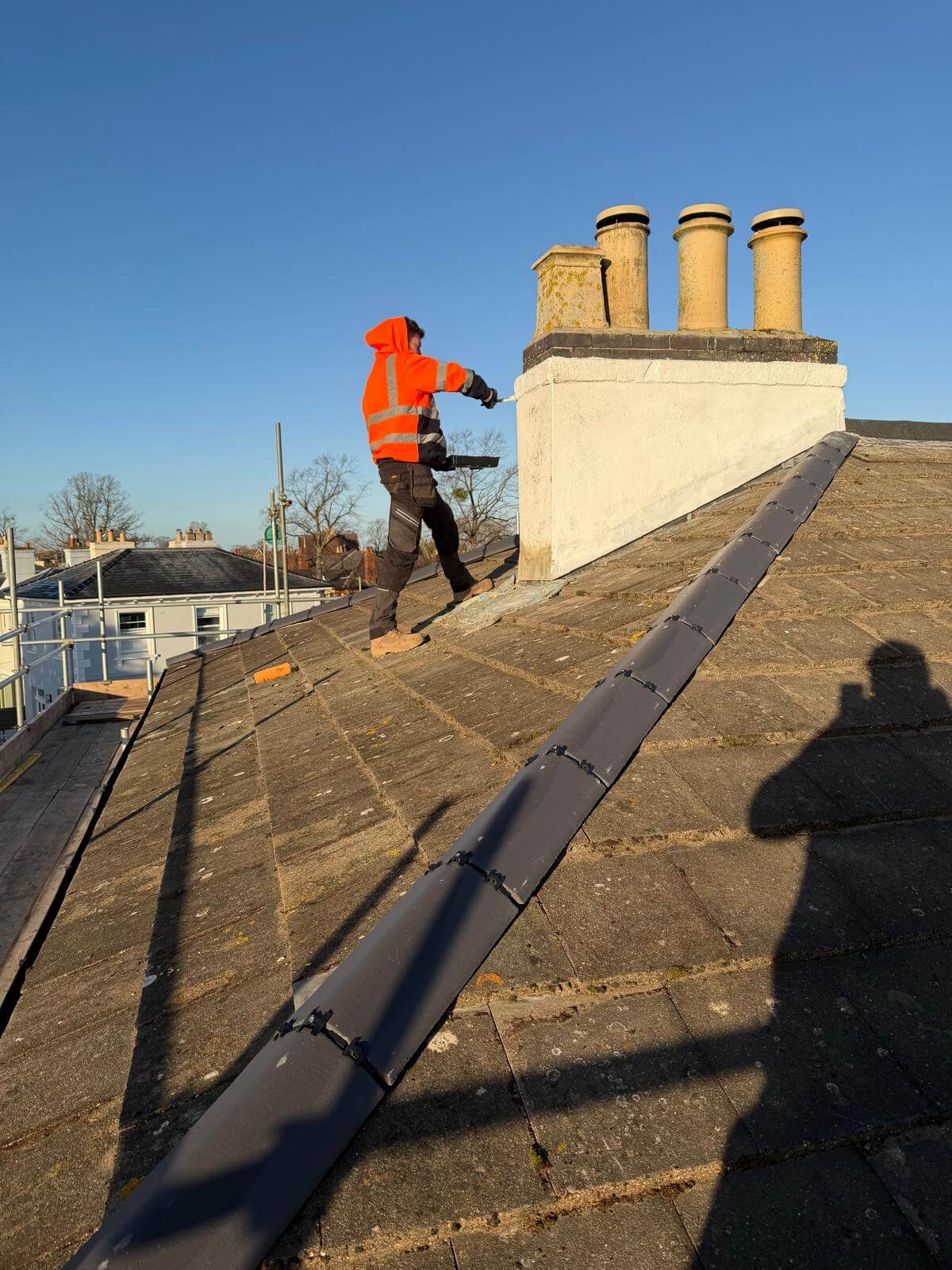
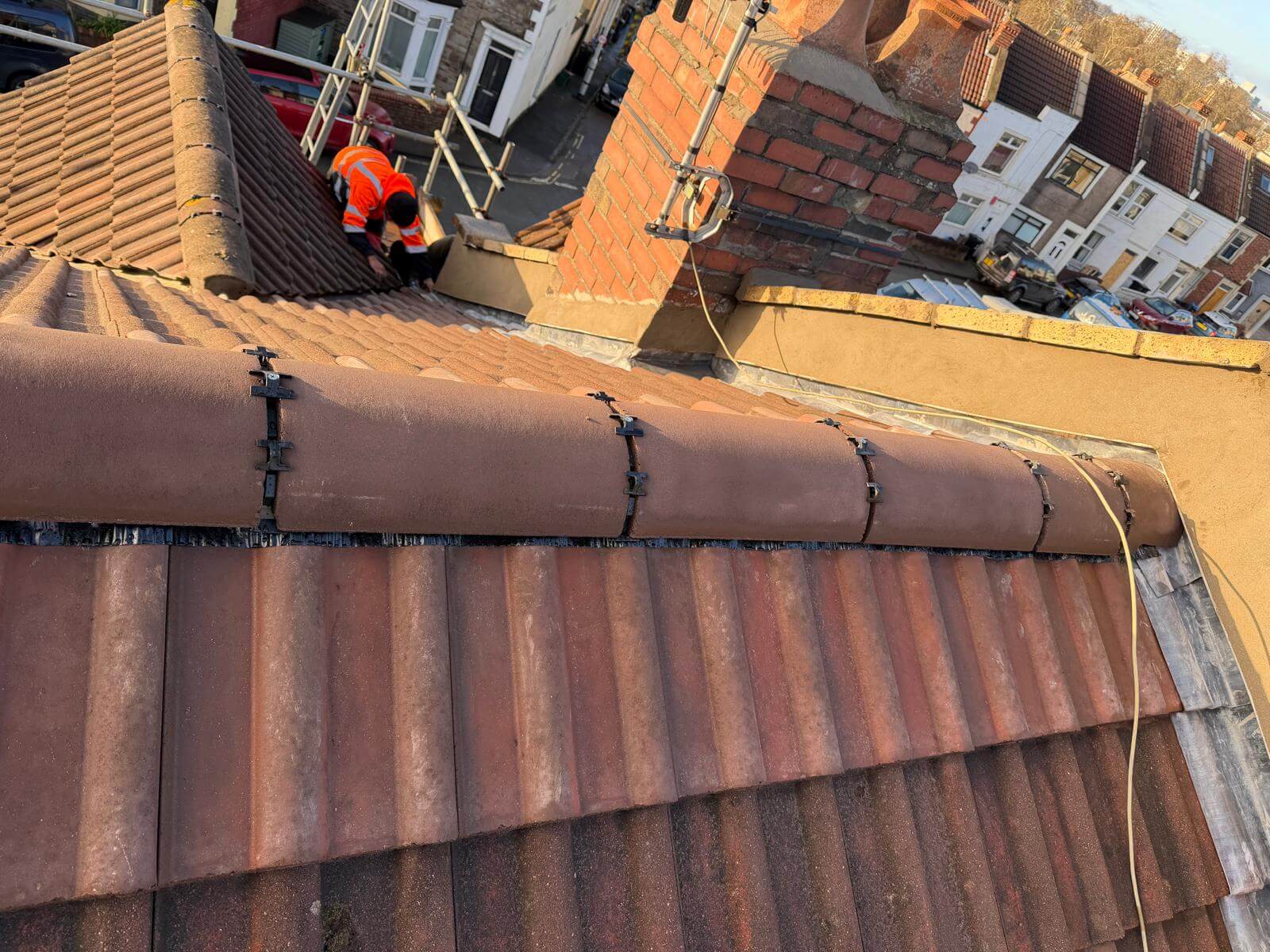
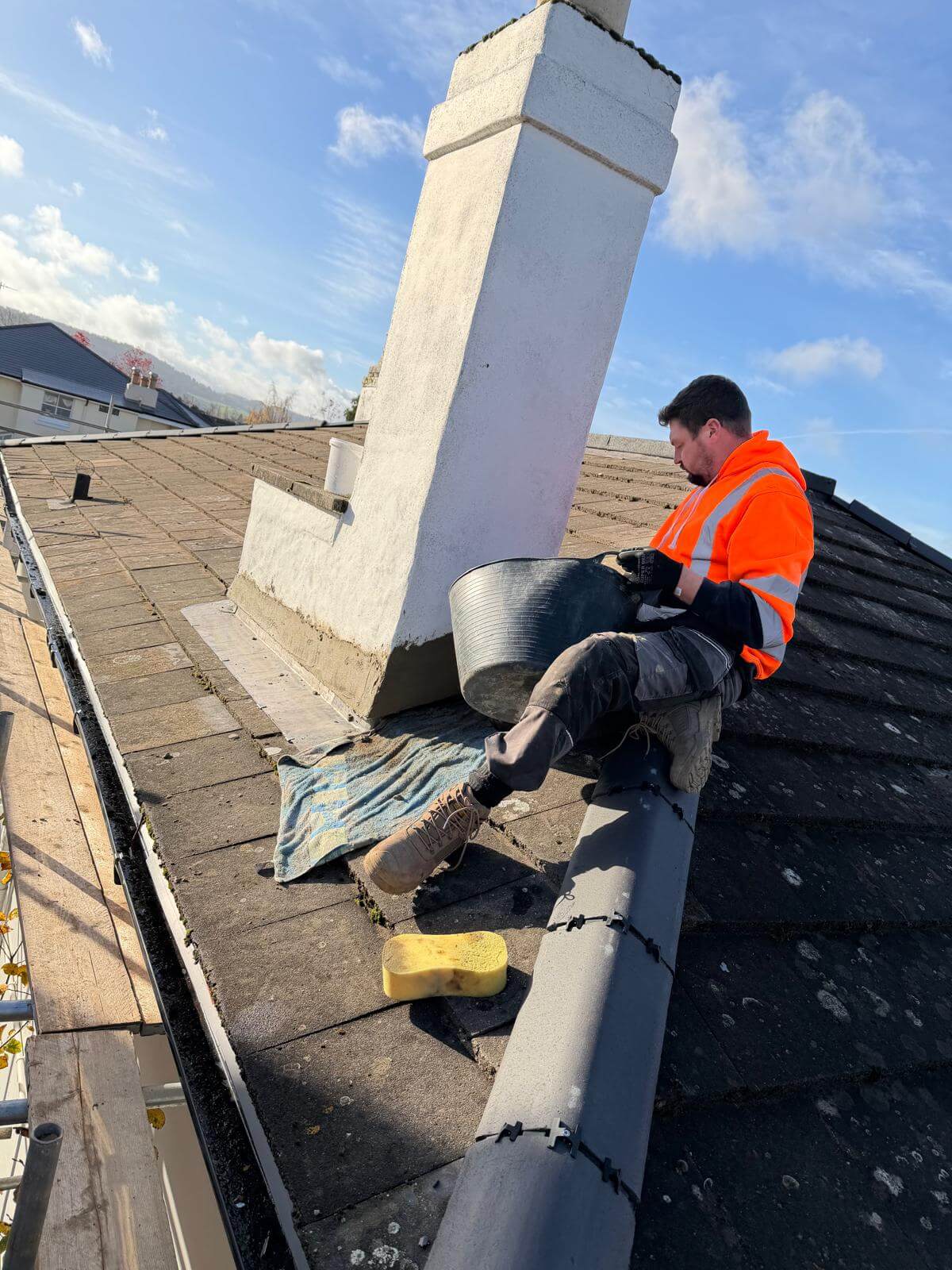
If there's one chimney-related problem that we're called to investigate repeatedly across Kingswood's right-to-buy housing stock, it's this: a damp patch on the chimney breast wall — typically in an upstairs bedroom or on the ground floor — that has been attributed to rising damp, condensation, or structural wall failure, when the actual cause is something on the chimney stack itself that nobody has looked at.
The pattern is consistent. The property was bought under right-to-buy in the 1980s or 90s. The coal fireplace was blocked up when central heating was installed. The chimney pot was never capped. For 30 to 40 years, rain has been entering the open flue, saturating the internal flue walls, and eventually manifesting as a damp patch on the chimney breast. The homeowner has had the damp treated internally — plaster stripped, damp-proof paint applied, replastered — but the external ingress point was never addressed so the damp returns every winter.
A capped flue pot and chimney repoint costs a fraction of repeated internal damp treatment. If your chimney breast keeps returning damp after internal treatment, the starting point is an external inspection of the stack — not another layer of internal membrane.

Open flue, damp chimney breast, or storm damage? Call Thomas. Drone survey included, written quote, no obligation.
Contact TD Roofing Contractors today for your no-obligation professional chimney assessment.
We don’t just "patch leaks." At TD Roofing we deliver engineered solutions specifically designed to withstand the high-velocity winds of the Severn Estuary. Every project is executed strictly to BS 5534 standards, ensuring your home has the maximum wind resistance and structural longevity required for the Bristol climate.


TD Roofing Contractors are your local roofing contractors in Bristol, providing 20+ years of expert service. From emergency roof repairs to new slate installations, we cover all BS postcodes with quality and integrity.
Copyright © 2026 TD Roofing Contractors LTD. All Rights Reserved.
Web Design by Tradesman Marketing Experts