
Kingswood's housing stock has two distinct re-roofing triggers that you won't find described on any generic Bristol roofing website:
The concrete tile delamination curve. The post-war and 1960s semis across BS15's residential streets were roofed in concrete interlocking tiles manufactured between roughly 1945 and 1980. These tiles are now between 45 and 80 years old. Concrete tile has a natural service life of 40 to 60 years — after which the cement binder begins to break down, tiles become porous and absorb water heavily, and the surface progressively delaminates. A delaminating concrete tile doesn't just look bad — it loses its ability to shed water effectively and begins to admit moisture through the tile face itself even when no individual tile is cracked or displaced. Once delamination affects more than 20 to 25 percent of the tiles on a roof, individual tile replacement is a false economy. The roof needs re-covering.
The right-to-buy maintenance gap. A significant proportion of Kingswood's housing stock was bought under right-to-buy schemes in the 1980s and early 1990s. Many of these properties were maintained to a basic standard by the council before purchase, but the roof — an expensive item with a long maintenance cycle — was frequently at or approaching the end of its serviceable life at the point of purchase. Forty years of private ownership without roof investment later, these properties are presenting for new roofs at volumes that reflect the original stock age. The complication is that right-to-buy properties frequently also have fascia, soffit, gutter, and chimney maintenance backlogs that need to be addressed at the same time.


Concrete Interlocking Tile Re-Roof
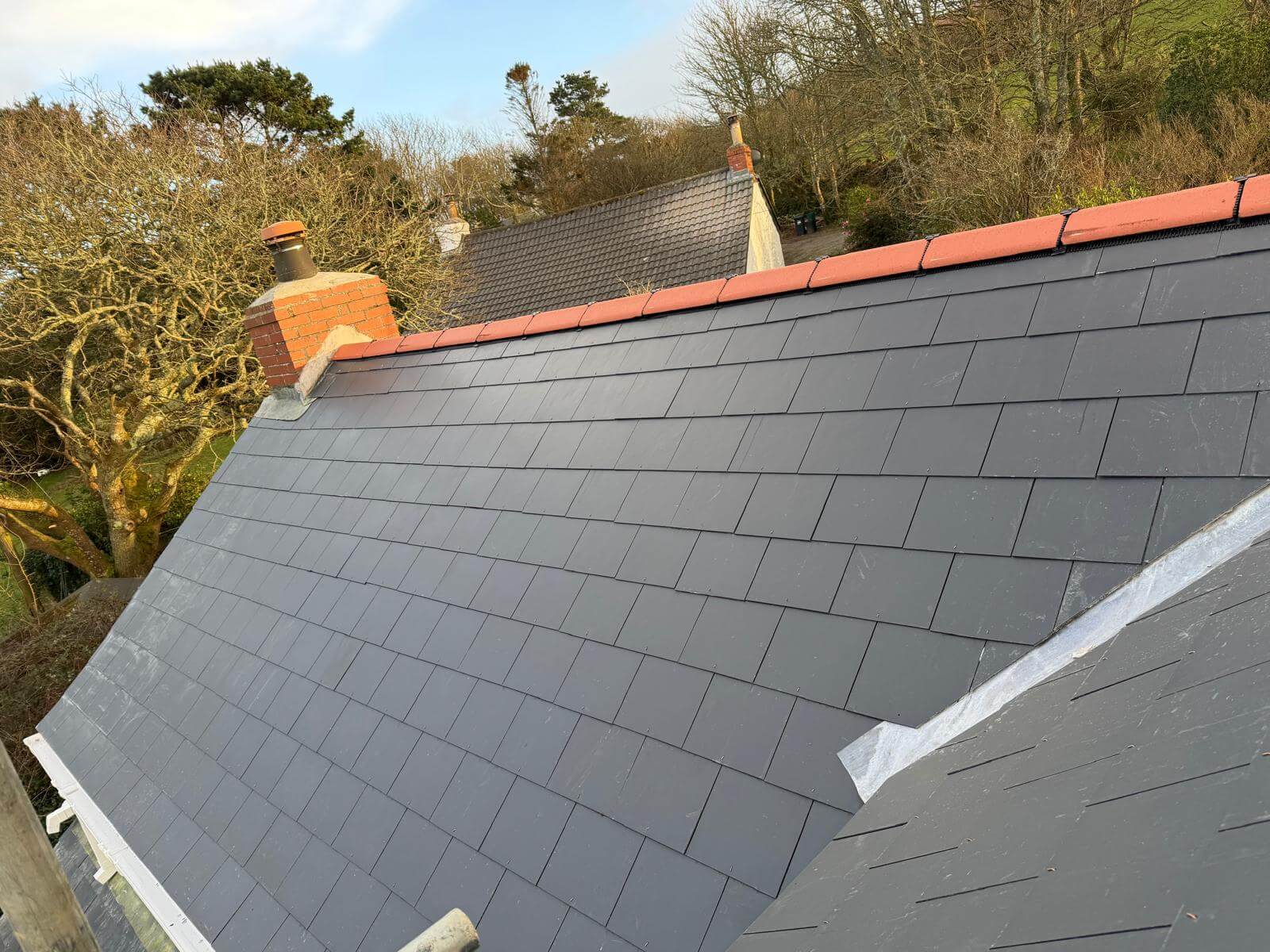
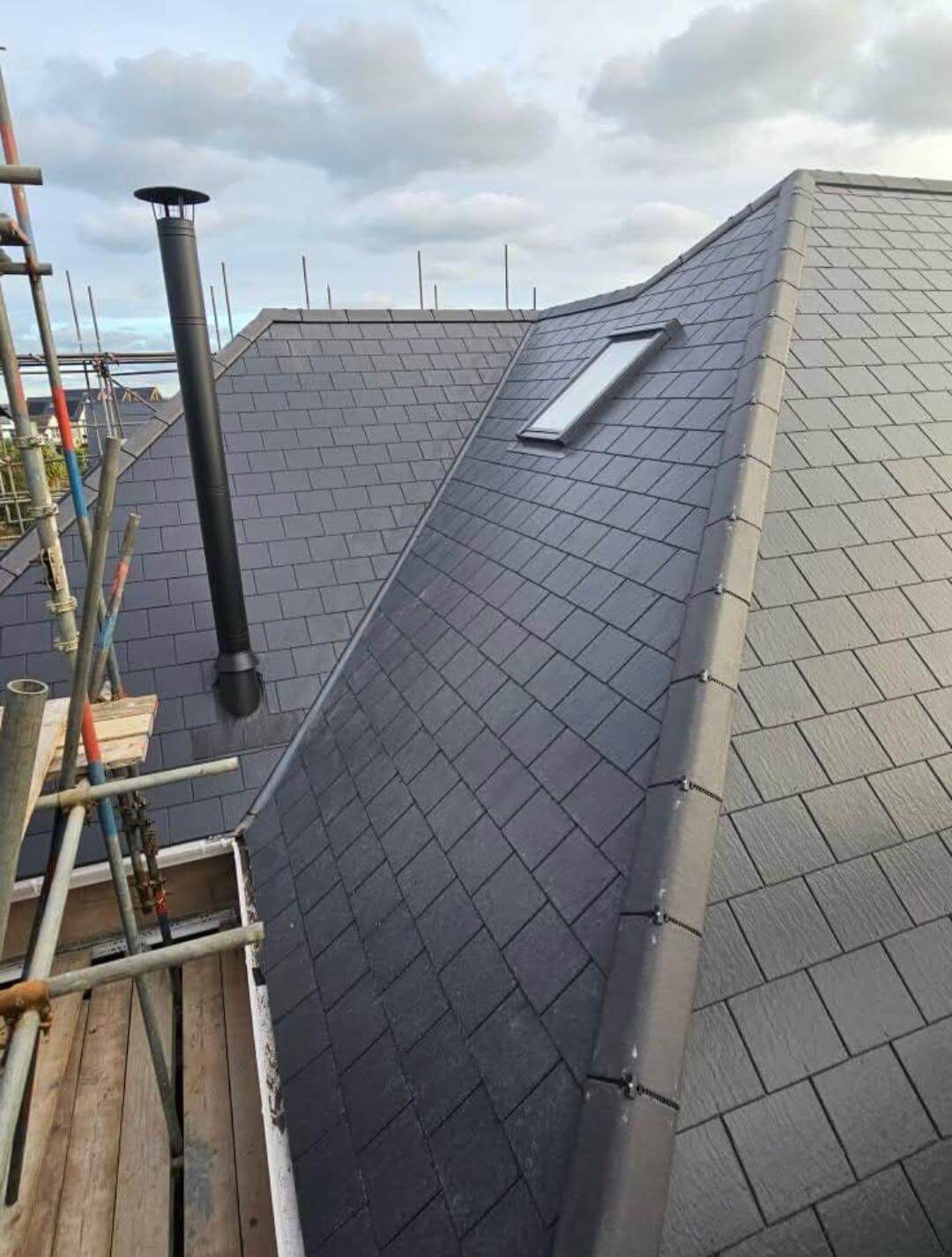
The most common new roof job across BS15's post-war stock. Full strip of existing tile, felt underlay, and battens to the rafter. New breathable membrane, treated timber battens at the correct gauge and spacing for the replacement tile, new concrete or fibre cement interlocking tile in the closest available profile to the original. Dry ridge system at the apex — mechanically fixed, no mortar, 20-year guarantee on the ridge fixing system.
Low-Pitched Roof Re-Specification
Kingswood's 1960s terraces and semis frequently have roof pitches between 17 and 28 degrees — at the lower end of the range for standard concrete interlocking tile. At these pitches, the replacement tile and underlay specification needs to be correct for the actual pitch angle, not a standard specification applied without measuring. We confirm the pitch angle during the survey before specifying tile and underlay.
Victorian Terrace Re-Roof — Reclaimed Welsh Slate
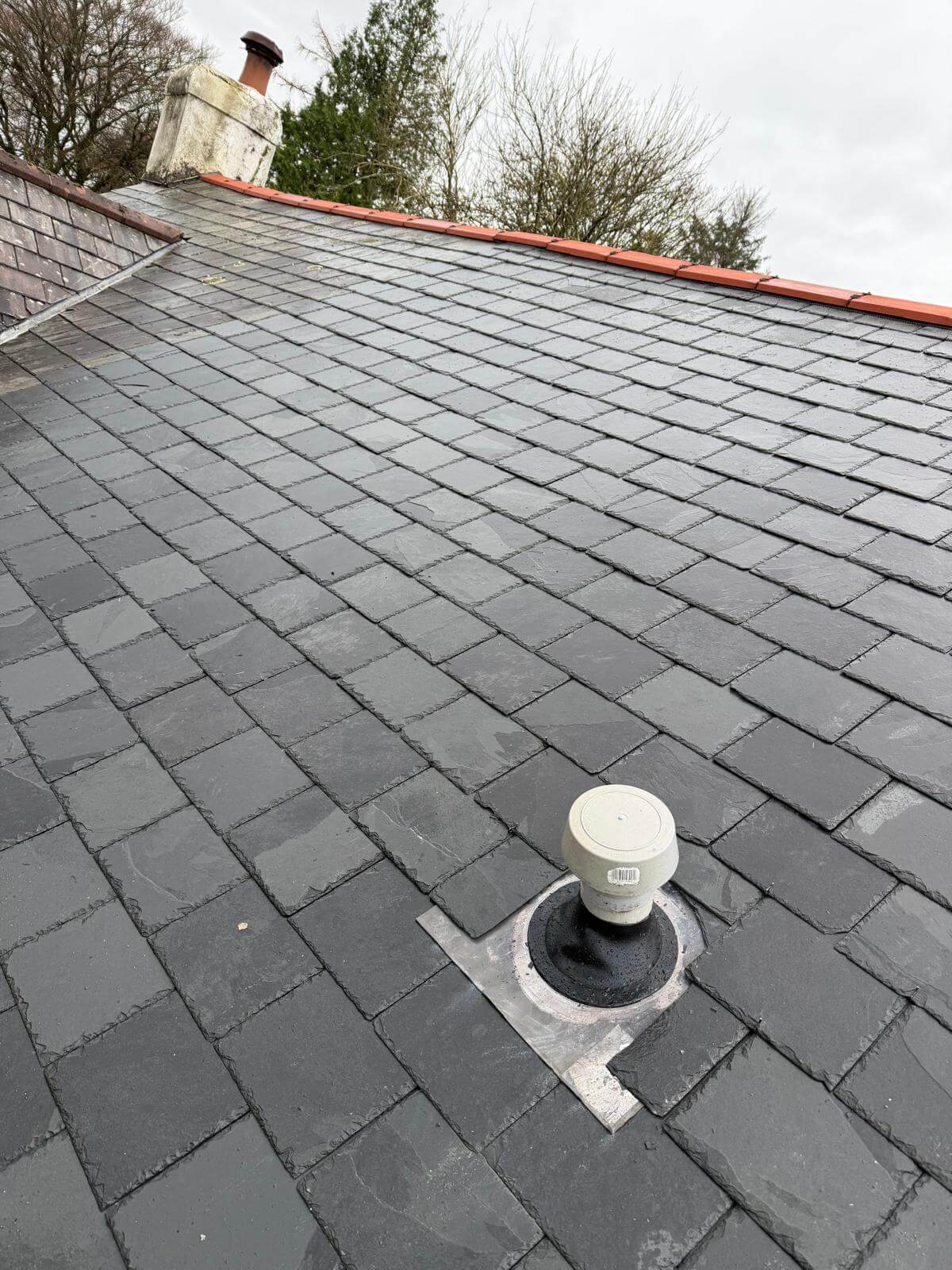
The older Victorian terrace stock around the Kingswood town centre is predominantly original Welsh slate on nail fixings now well past their design life. When nail sickness has progressed to the point where re-roofing is the honest recommendation, we specify reclaimed Welsh slate in matched grade and thickness, install on new breathable membrane and treated battens with stainless fixings, and detail all lead work correctly at valley and chimney junctions.
Flat Garage Roof Recovery
Post-war and right-to-buy properties across Kingswood almost universally have integral or adjacent flat-roofed garages in torch-on felt that is now 40 to 55 years old. We recover in EPDM rubber — cold-applied, 20-year material warranty, no naked flame near timber — either as a standalone job or combined with a main roof re-roof while the scaffold is already in position.
Fascia, Soffit, and Gutter Replacement Package
Right-to-buy properties with a maintenance backlog frequently need fascia, soffit, and gutter replacement at the same time as the main roof. Combining all three in a single scaffold mobilisation reduces the overall project cost significantly compared to doing them separately. We assess and quote all elements together, with clear line itemisation so you can choose what to include.
When we're assessing a Kingswood post-war property for potential re-roofing, the drone survey focuses on five specific indicators that tell us whether the roof is approaching replacement point or still has meaningful life:
Tile porosity and moss coverage. Heavy, deeply rooted moss across a significant proportion of the tiles indicates tiles that are retaining moisture rather than shedding it — a sign of advanced porosity. Light moss that clears easily after treatment is a different situation.
Surface delamination pattern. Drone footage in good light shows surface delamination clearly — tiles where the surface layer is separating, blistering, or has already shed. More than 20 percent of tiles showing visible delamination is the threshold where replacement becomes more cost-effective than treatment.
Ridge mortar condition. Failed ridge mortar is often the first visible failure on an ageing concrete tile roof. Widespread ridge failure across the full ridge length, rather than isolated sections, suggests the mortar throughout the roof system is at the same age and condition — and that other mortar-bedded elements will follow.
Underlay condition where visible. At the eaves and at any gaps in the tiling, the condition of the existing underlay is sometimes visible. Brittle, disintegrated felt at the eaves edge is a reliable indicator that the underlay across the whole roof has failed.
Overall tile breakage pattern. Individual broken tiles are a repair situation. A pattern of breakages — multiple tiles in adjacent positions, widespread small cracks across many tiles — indicates tiles that have become too brittle for continued service.
We walk through the drone footage with you after the survey and explain what each indicator means before making any recommendation.
My post-war semi has the original concrete tiles — how do I know if they need replacing or just cleaning?
The distinction is whether the tiles are still shedding water effectively or have become porous to the point where they're retaining it. Drone footage showing heavy moss that's established deeply into the tile surface, visible surface delamination, or widespread cracking tells us the tiles are past treatment and into replacement territory. Light moss on otherwise sound tiles is a different situation where cleaning and treatment can extend life meaningfully.
Can you match the original concrete tile profile on my 1960s Kingswood semi?
In most cases closely — original 1960s interlocking tile profiles are broadly replicated by current manufacturers. We identify the existing profile during the survey and source the closest current match. An exact tile-for-tile match isn't always possible on tiles from specific 1960s manufacturers, but the replacement profiles available are visually consistent with the originals on the same street.
My right-to-buy property needs a new roof but also has problems with the gutters and fascias — can you do all of it together?
Yes — and we strongly recommend it where multiple elements need attention simultaneously. Combining the roof, fascia, soffit, and guttering in one project with one scaffold setup reduces the overall cost and avoids repeated disruption. We assess and quote all elements together with clear line itemisation so you can prioritise what to include in a single mobilisation.
How long does a new roof take on a typical Kingswood post-war semi?
A standard post-war semi in concrete interlocking tile takes 4 to 7 working days including scaffold. Adding the flat garage recovery adds 1 to 2 days. We provide a clear programme as part of the written quote.
Do you offer same-day emergency callouts in Kingswood?
Yes. Call 0117 370 9986 for same-day emergency response across BS15.

Concrete tile roof approaching end of life, right-to-buy property with a maintenance backlog, or Victorian terrace with nail sickness? Call Thomas. Free 4K drone survey, straight recommendation, fully itemised written quote.

We don’t just "patch leaks." At TD Roofing we deliver engineered solutions specifically designed to withstand the high-velocity winds of the Severn Estuary. Every project is executed strictly to BS 5534 standards, ensuring your home has the maximum wind resistance and structural longevity required for the Bristol climate.


TD Roofing Contractors are your local roofing contractors in Bristol, providing 20+ years of expert service. From emergency roof repairs to new slate installations, we cover all BS postcodes with quality and integrity.
Copyright © 2026 TD Roofing Contractors LTD. All Rights Reserved.
Web Design by Tradesman Marketing Experts