This is the most common context for chimney repair enquiries we receive in Henleaze — a property that's been owned by the same family for a generation, the coal fireplace was blocked up in the 1970s when central heating arrived, and in 30 or 40 years nobody has given the chimney stack a second thought. Until water starts appearing on the chimney breast wall upstairs.
Long-term family ownership of Henleaze's larger properties is common across BS9 and BS10. These are houses that were bought in the 1970s or early 1980s when the area was still considered peripheral rather than premium, held through the property boom, and now represent significant value. The roof and chimney maintenance across that ownership period has often been sporadic — a roof repair here, a gutter clearance there — but the chimney stacks have frequently been ignored for decades on the basis that nobody uses the fireplaces anymore.
An ignored chimney stack doesn't fail immediately. The deterioration is gradual — mortar joints opening slowly over years, the flaunching cracking through freeze-thaw cycles, the lead at the roof junction lifting at the dressed edges as the base metal fatigues. By the time water appears on the chimney breast internally, the external deterioration has typically been developing for five to ten years.
The survey takes an hour. The repair, in most Henleaze cases, is straightforward. The alternative is continued water ingress into the chimney breast and eventual structural damage to the flue walls.


Lime Mortar Repointing — Edwardian Properties
The older Edwardian properties along Henleaze Road and Lake Road have soft red brick that demands lime mortar for correct repointing. We cut out all failed or cement-contaminated joints — and there are almost always cement joints from previous repointing on these properties — and repoint in the correct lime mortar specification. Lime is not optional on Edwardian soft brick. Cement accelerates the deterioration it's applied to.
Standard Repointing — 1930s Interwar Stock
The harder brick used in Henleaze's solid interwar semis is compatible with modern lime mortar — which we use as standard — though the pressing requirement on period properties isn't quite as absolute as on the softer Edwardian brick. We assess the brick type and condition during the survey and specify accordingly.
Lead Flashing Replacement
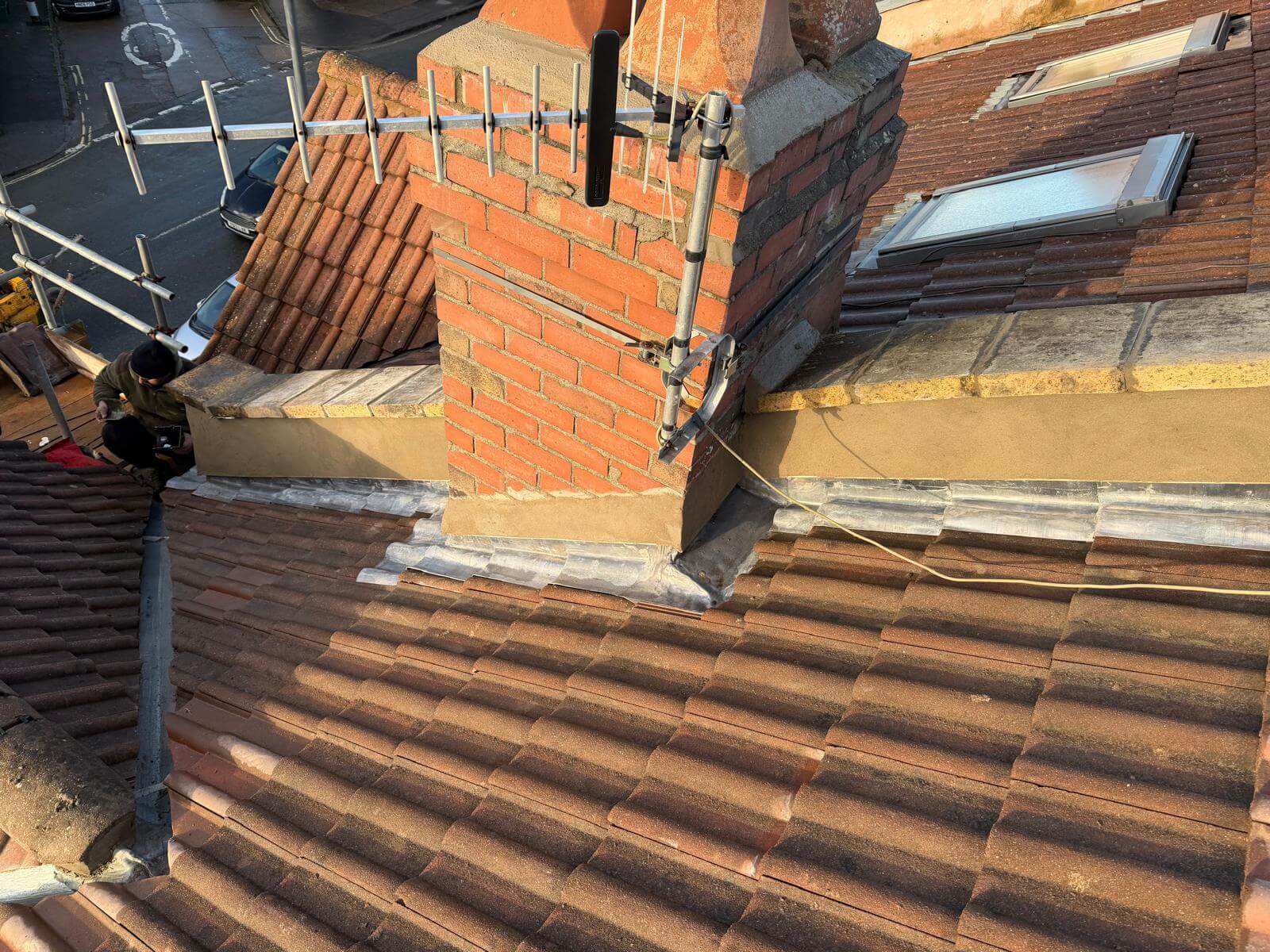
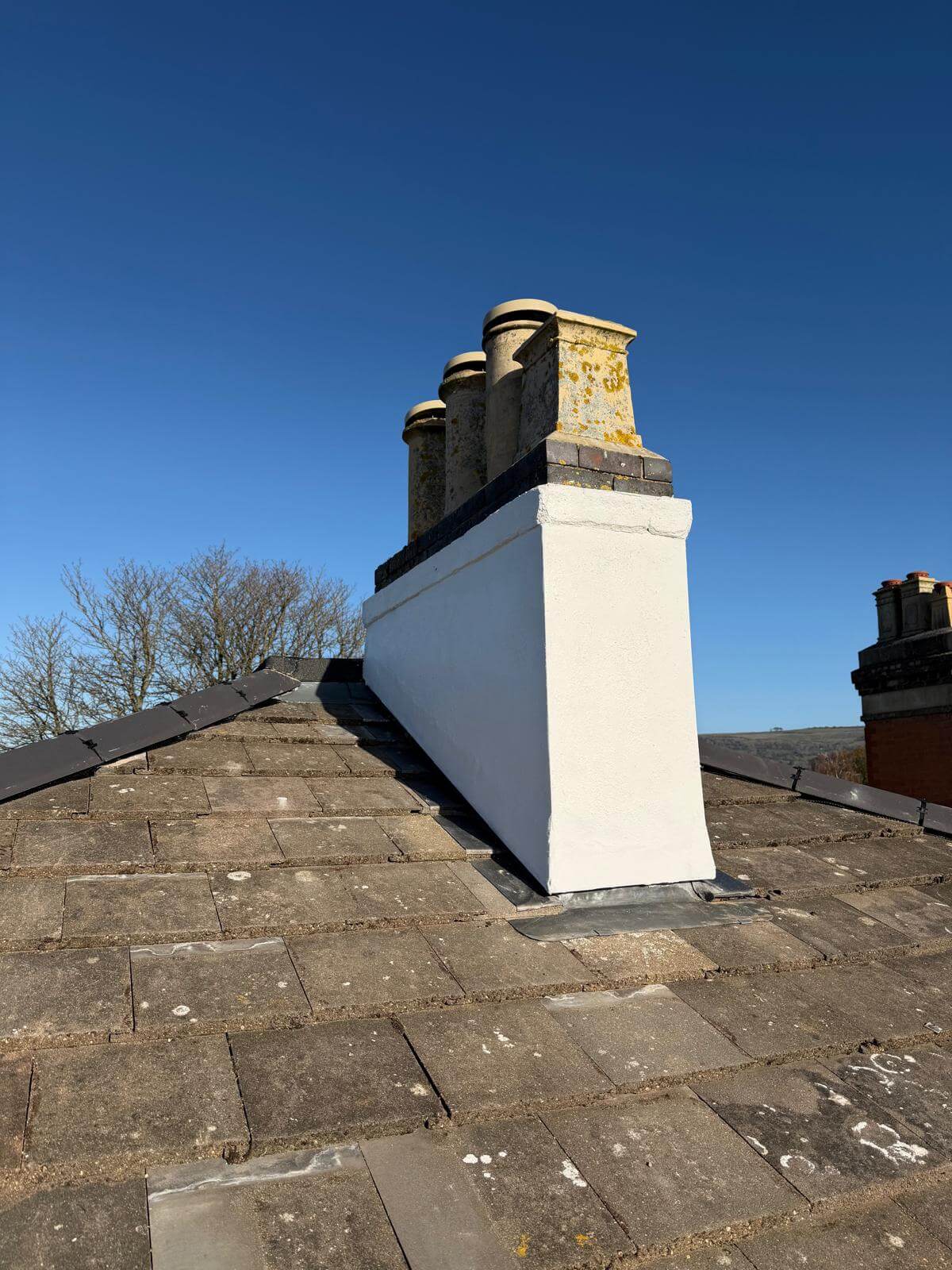
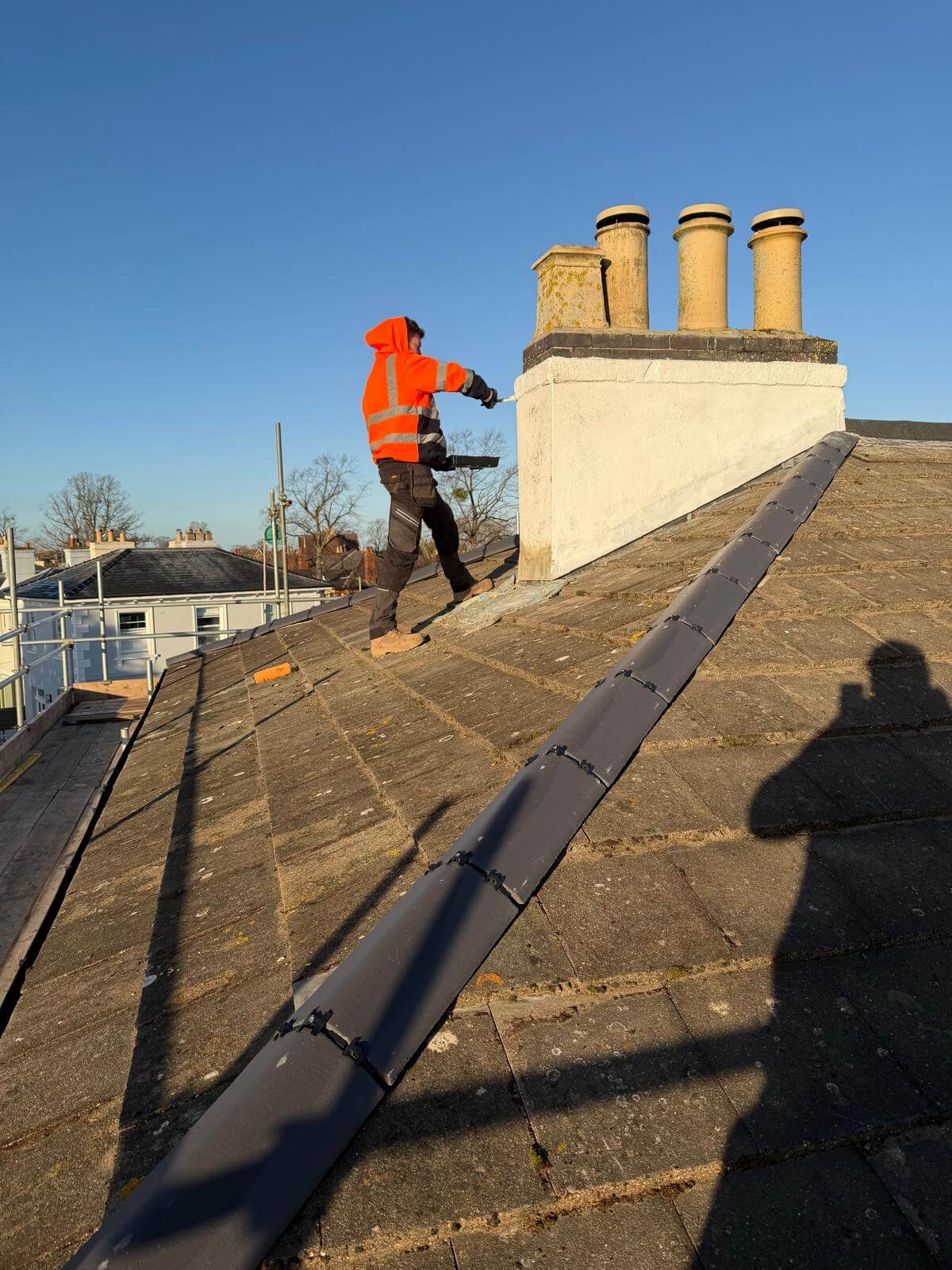
Code 4 step flashings and Code 5 cover flashings on every face of the chimney stack junction, correctly dressed and wedged into the mortar joint. On Henleaze's Edwardian properties with larger stacks projecting well above the ridge, the back gutter — the lead channel behind the upslope face of the stack — is frequently the first element to fail and the source of the most persistent leaks. We assess and quote the back gutter as a specific element of every Edwardian stack repair.
Flaunching Repair and Replacement
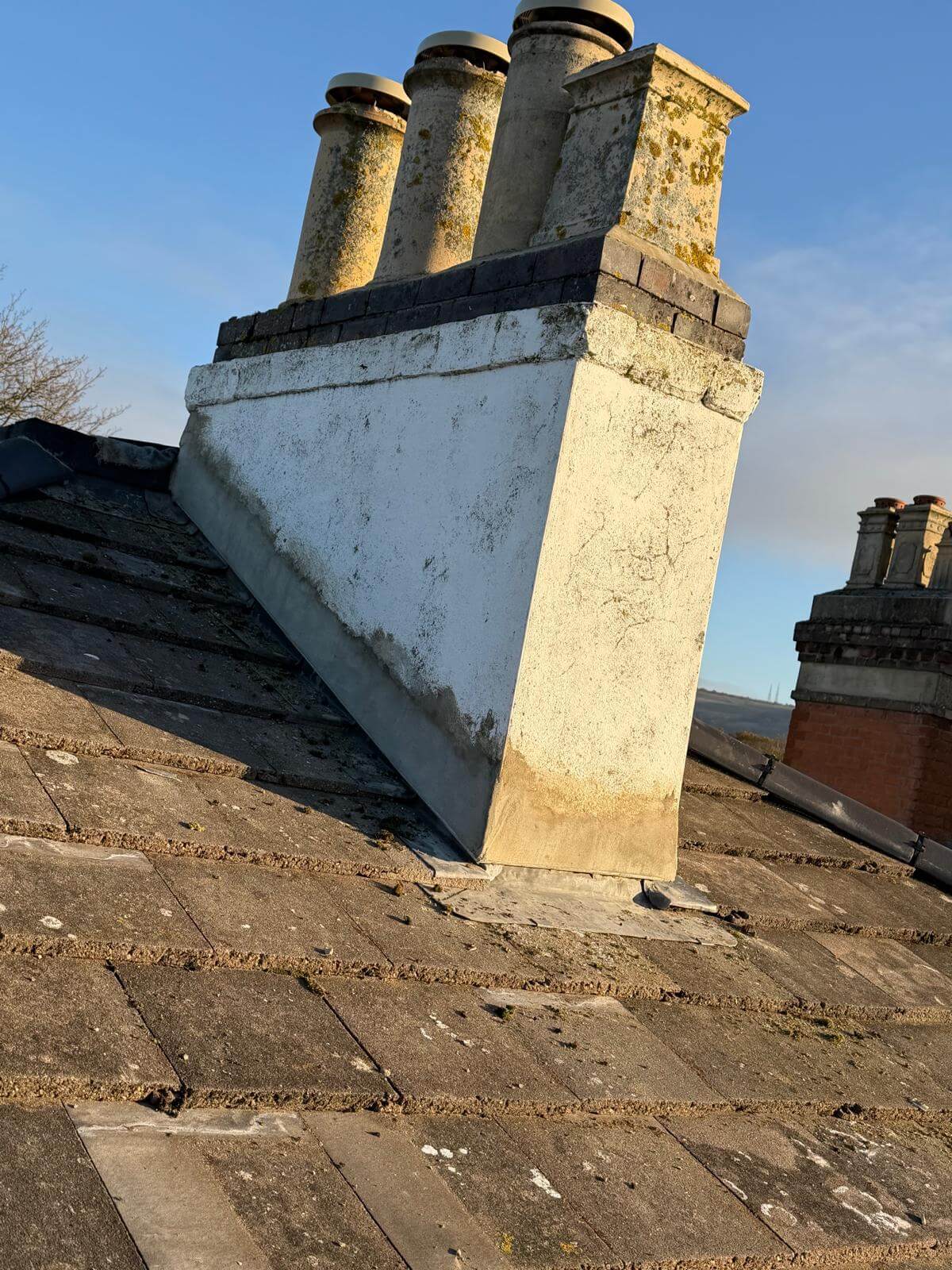
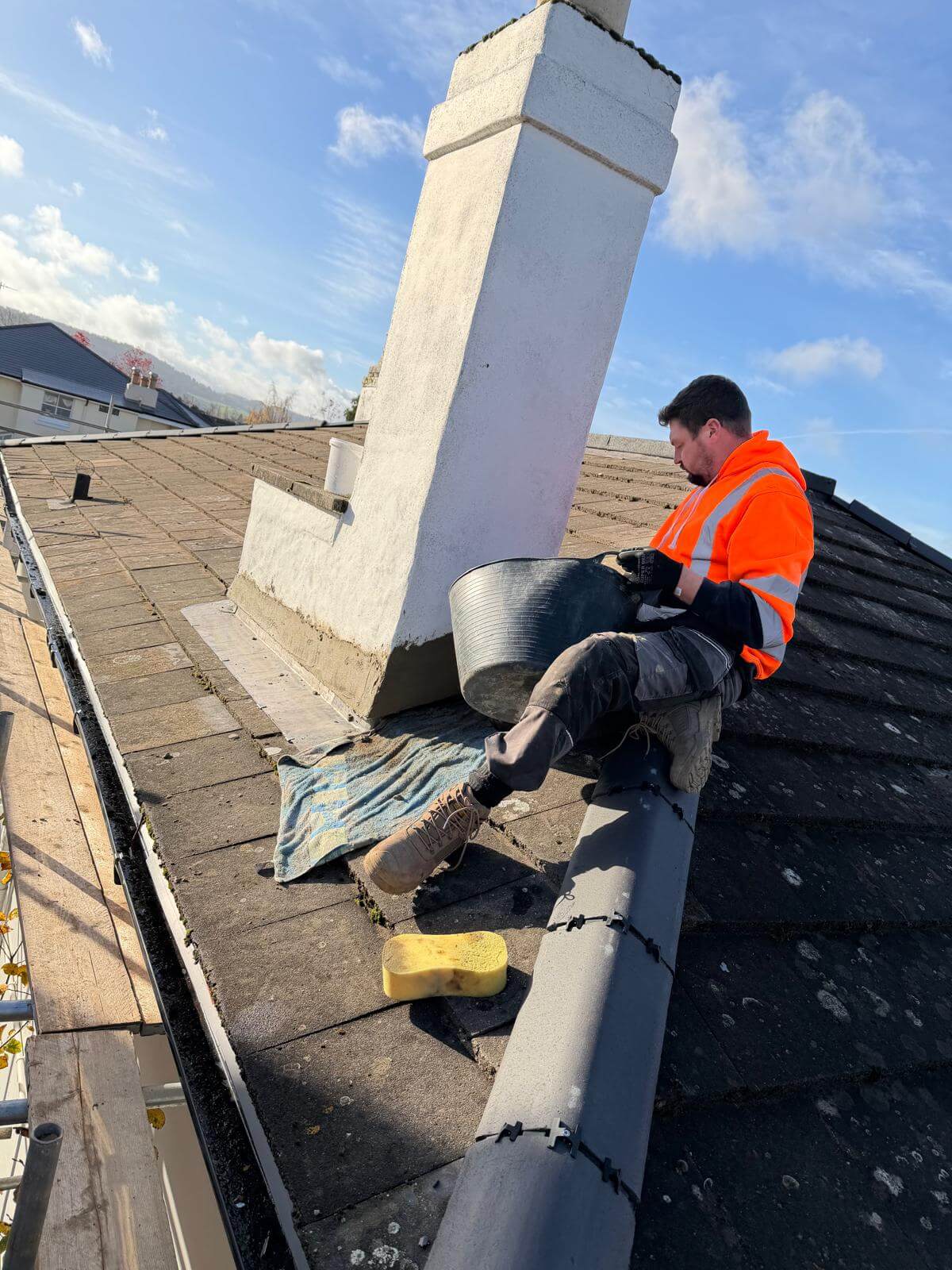
Cracked and failing flaunching is the most consistent finding across Henleaze's 1930s interwar semis — particularly on properties that have been owned long-term and where nobody has inspected the stack in decades. We replace in waterproof mortar correctly formed to crown away from the pot base.
Unused Flue Capping
The most frequently deferred chimney maintenance task on Henleaze's older stock. Open unused flues admit rain into the flue chamber year-round, saturating the internal flue lining and causing the recurring damp chimney breast that many BS9 and BS10 homeowners treat internally without ever resolving externally. A ventilated cap on every open unused flue is a one-time fix for a recurring problem.
Chimney Stack Removal — Loft Conversions
Henleaze's larger Edwardian and interwar properties are increasingly being converted to create loft bedrooms and studies. Where a chimney stack passes through the proposed conversion space, we remove the external section below the roofline, close the opening in matched reclaimed slate, and seal the flue internally at fireplace level. Party Wall Act advice provided as standard where the stack is shared.
On the larger Edwardian stacks along Henleaze Road and Lake Road, there's a lead element at the chimney junction that's rarely mentioned in any chimney repair discussion but is the single most common source of persistent chimney breast damp on these properties — the back gutter.
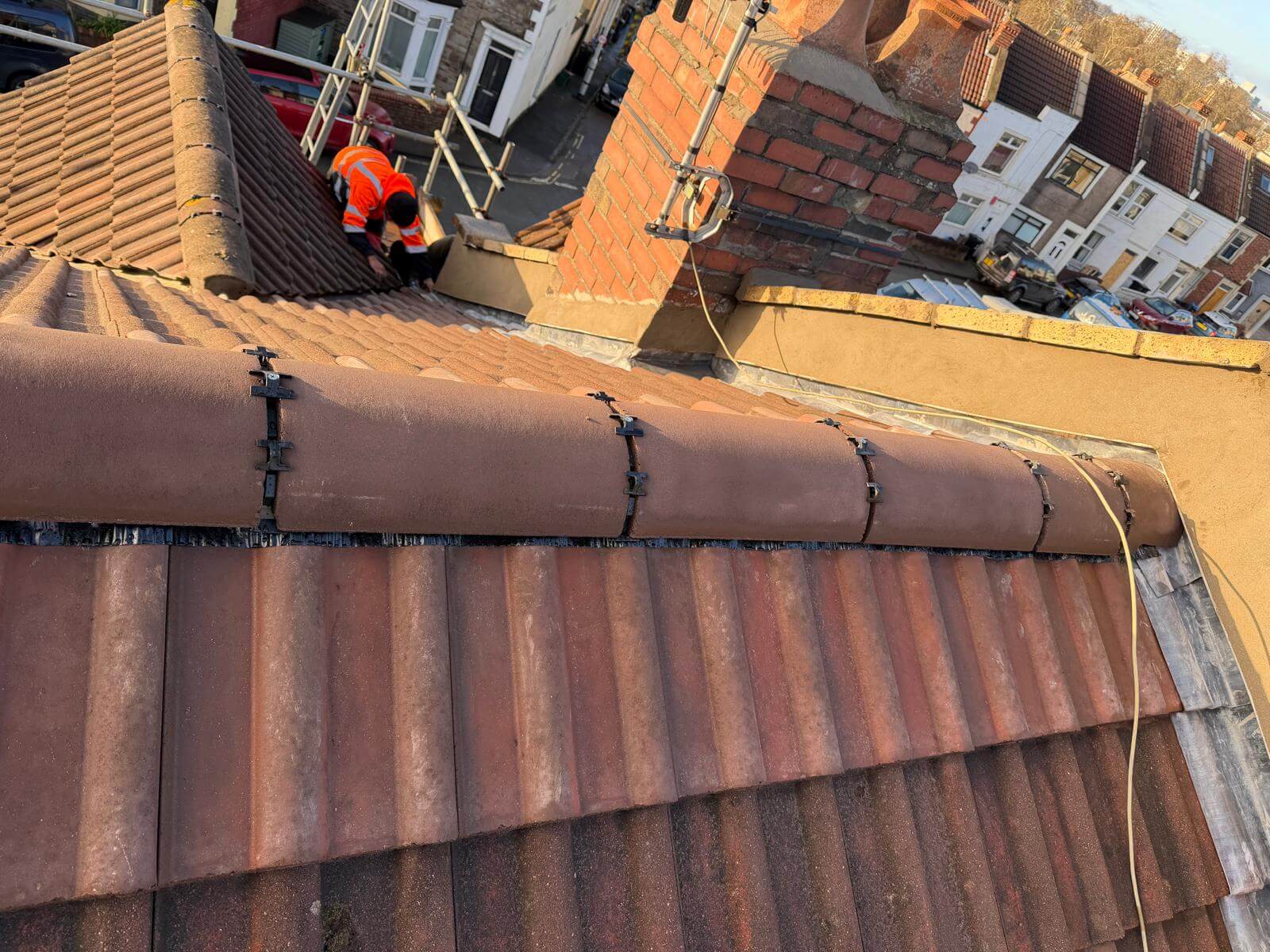
The back gutter is the lead channel that runs along the upslope face of the chimney stack — between the rear face of the stack and the ascending roof slope behind it. It collects water running down the roof slope above the stack and directs it around the sides of the stack and into the valley soakers. When the back gutter fails — through lead fatigue, lifted edges, or simply the wrong original specification — water doesn't exit the junction correctly and instead tracks behind the lead and down through the roof structure.
It's frequently missed in chimney surveys because it's on the roof slope behind the stack, not visible from the pavement and not easy to see even from the front of the stack. Our drone surveys the back gutter on every Edwardian stack in Henleaze as a standard element — not an afterthought.
My property has been in the family for decades and the chimney has never been touched — what should I expect to find?
On a Henleaze property with 30 to 40 years of no chimney maintenance, the survey typically finds failed flaunching, open unused flue pots, mortar joint deterioration — and often cement repointing from a previous repair that predates our current ownership. None of these are alarming individually, and the repair is almost always straightforward. The drone survey gives you the full picture before we discuss any cost.
My chimney breast wall keeps getting damp even after internal treatment — what's the real cause?
Almost certainly an external failure that wasn't addressed when the internal treatment was carried out. Open unused flue pots are the most common cause on Henleaze's long-term family-owned properties — rain has been entering the open flue for years and saturating the flue walls. Capping the flue externally and allowing the structure to dry out resolves the recurring damp. Internal treatment alone, without addressing the external ingress, is a cycle that repeats every winter.
Do you survey the back gutter on Edwardian stacks?
Yes, as standard. The back gutter is the most commonly missed element on Henleaze's Edwardian chimney surveys and the most common source of persistent chimney breast leaks on these properties. We include it in every drone survey on an Edwardian stack regardless of whether the homeowner has specifically mentioned it.
Do you offer same-day emergency callouts in Henleaze?
Yes. Call 0117 370 9986 for same-day response across BS9 and BS10.

Long-term ownership with no chimney maintenance, recurring damp chimney breast, or a stack you haven't had looked at in years? Call Thomas. Free drone survey, written condition report, no obligation.
We don’t just "patch leaks." At TD Roofing we deliver engineered solutions specifically designed to withstand the high-velocity winds of the Severn Estuary. Every project is executed strictly to BS 5534 standards, ensuring your home has the maximum wind resistance and structural longevity required for the Bristol climate.


TD Roofing Contractors are your local roofing contractors in Bristol, providing 20+ years of expert service. From emergency roof repairs to new slate installations, we cover all BS postcodes with quality and integrity.
Copyright © 2026 TD Roofing Contractors LTD. All Rights Reserved.
Web Design by Tradesman Marketing Experts