
Roofs in BS6 cannot be treated with standard modern suburban methods. Built predominantly between 1840 and 1890, Cotham's three- and four-storey properties feature complex, timber-framed roof structures that present very specific points of failure:
Concealed Parapet & Butterfly Valley Leaks: Many mid-terrace villas along Cotham Road and Hampton Park were designed with internal "M-shaped" or butterfly roofs enclosed behind raised front parapet walls. Rainwater drains into a central timber-lined lead trough that runs through the core of the building. When original Code 4 lead splits due to thermal fatigue or becomes choked with autumn debris, water overflows directly onto ceiling joists above central stairwells and hallway lath-and-plaster.
Porous Bath Stone Copings & Parapet Upstands: Front elevations frequently feature decorative Bath stone balustrades or solid stone parapet copings. Over 140+ years of exposure to damp Atlantic weather, the natural oolitic limestone copings become porous. Water soaks through the stone coping joints, bypassing external flashings and tracking down into internal wall cavities.
Corroded Iron Nails & Delaminating Welsh Slate: The original roofing material across Cotham is natural Welsh slate (primarily Bangor Penrhyn and Ffestiniog). While the slate itself can last over 150 years, the original hand-cut iron nails oxidize and snap (nail sickness). Slates slip silently down steep pitches, exposing internal battens to driving rain.
Damage from Historical Portland Cement Pointing: Cotham’s tall, exposed chimney stacks and pennant stone rubble masonry were originally laid with soft, breathable lime mortar. Decades ago, contractors frequently carried out patch repairs using dense Portland cement. Cement traps moisture within the softer Victorian brick and stone, accelerating winter frost-spalling and causing bricks to crumble behind the pointing.
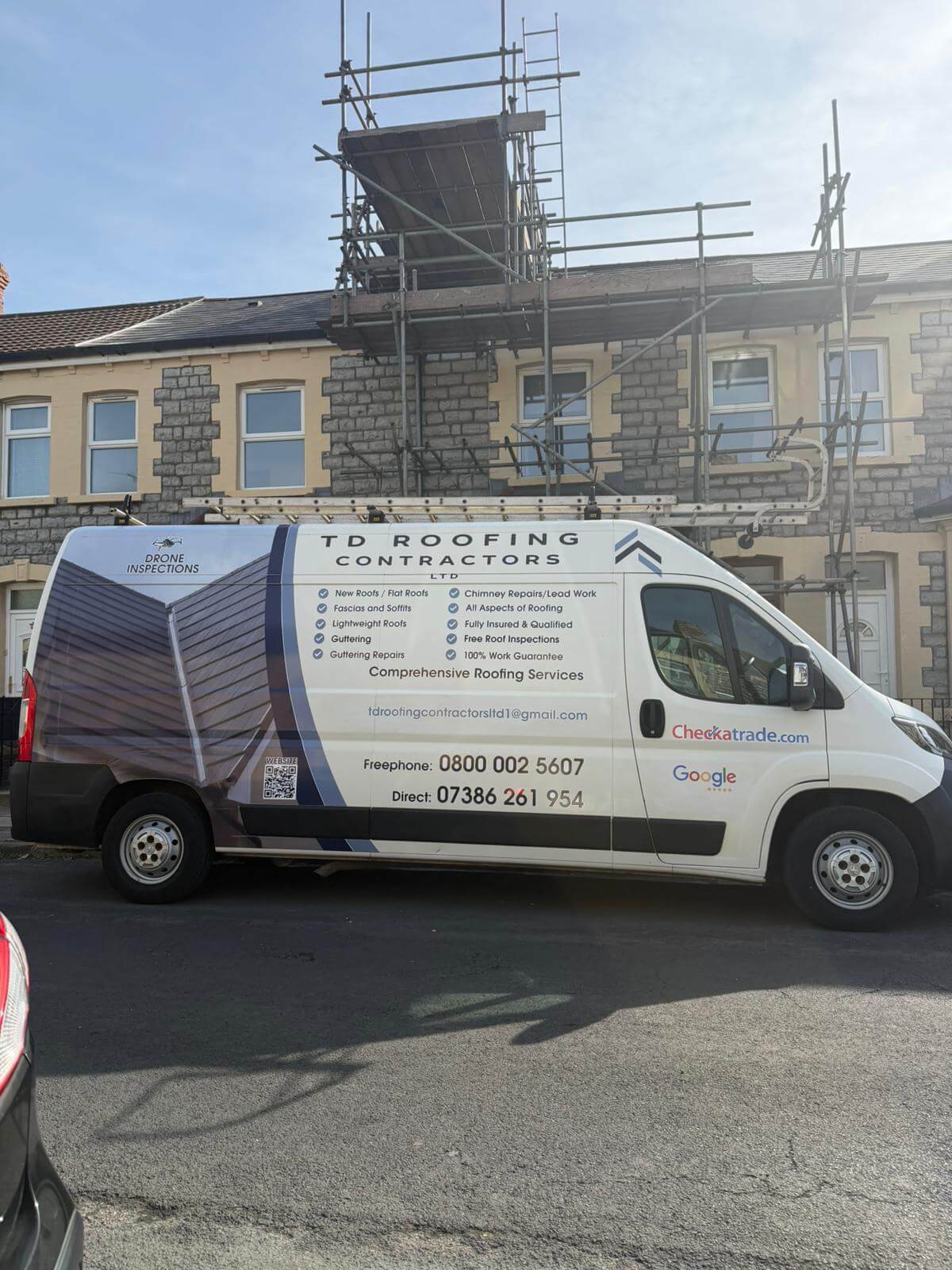
From the original Welsh slate on Georgian townhouses along Clifton Down Road to the flat-roofed extensions tucked behind Victorian semis on Pembroke Road — every roof in BS8 has its own demands. We know the area as your Roofers in Bristol, the architecture, and exactly what each property type needs.


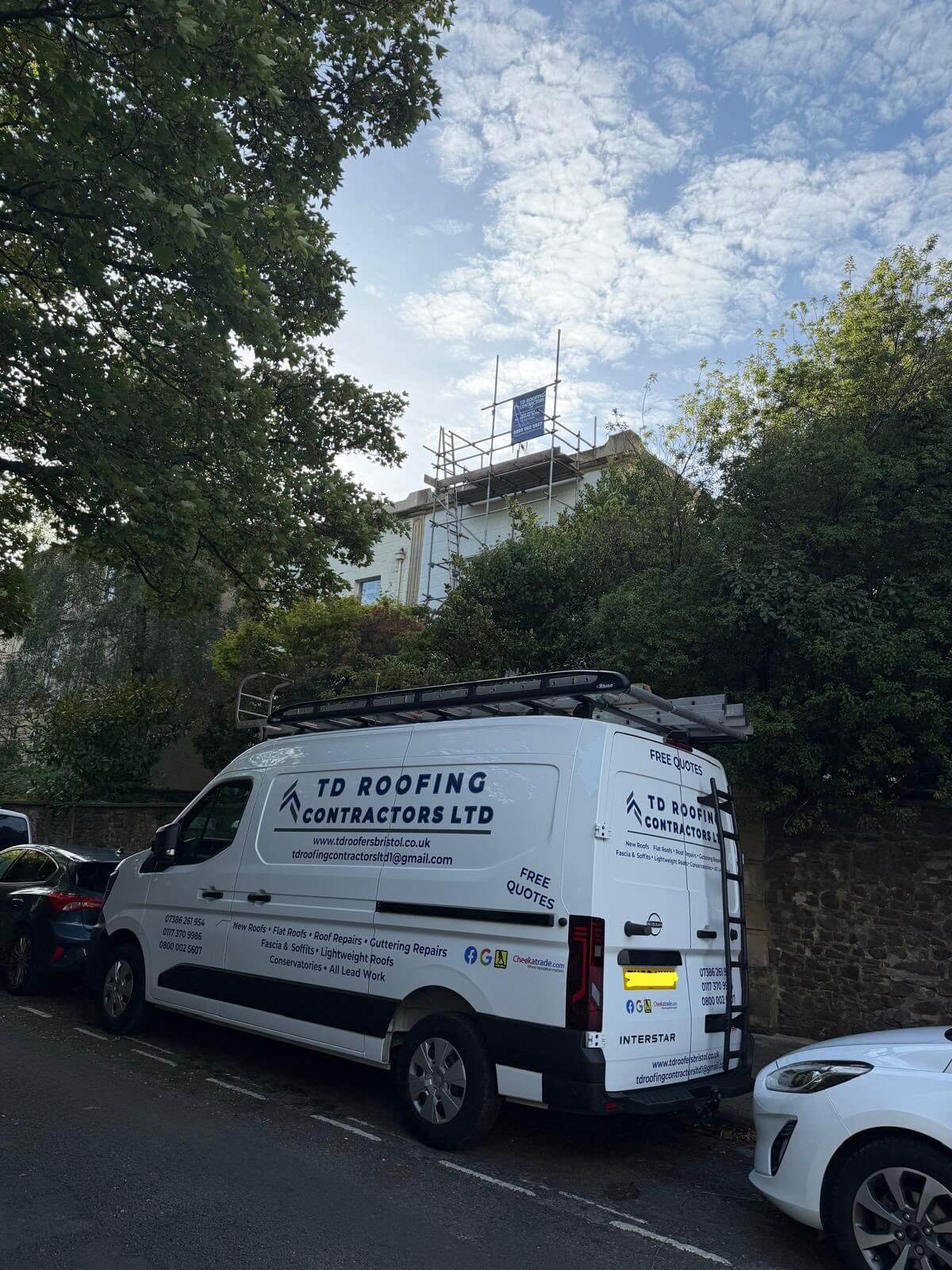
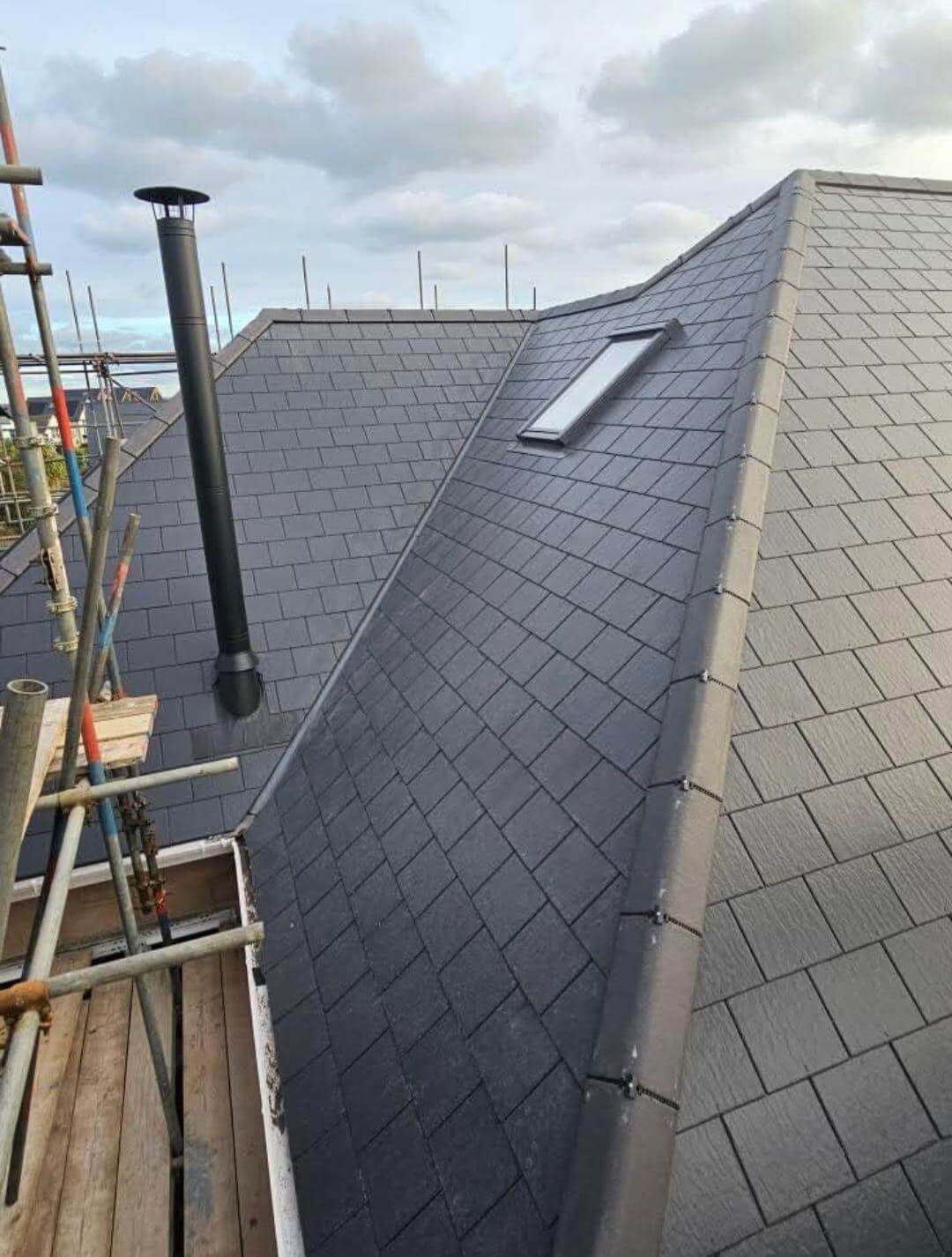
Replacing a roof in Cotham requires strict adherence to Bristol City Council’s Conservation Area requirements. We source genuine reclaimed Welsh slate or hand-graded premium Spanish natural slate that matches the original thickness, texture, and colour tone of the streetscape. Slates are hand-holed and double-fixed with heavy-gauge copper nails to treated timber battens, installed over high-performance breathable, vapour-permeable underlays.
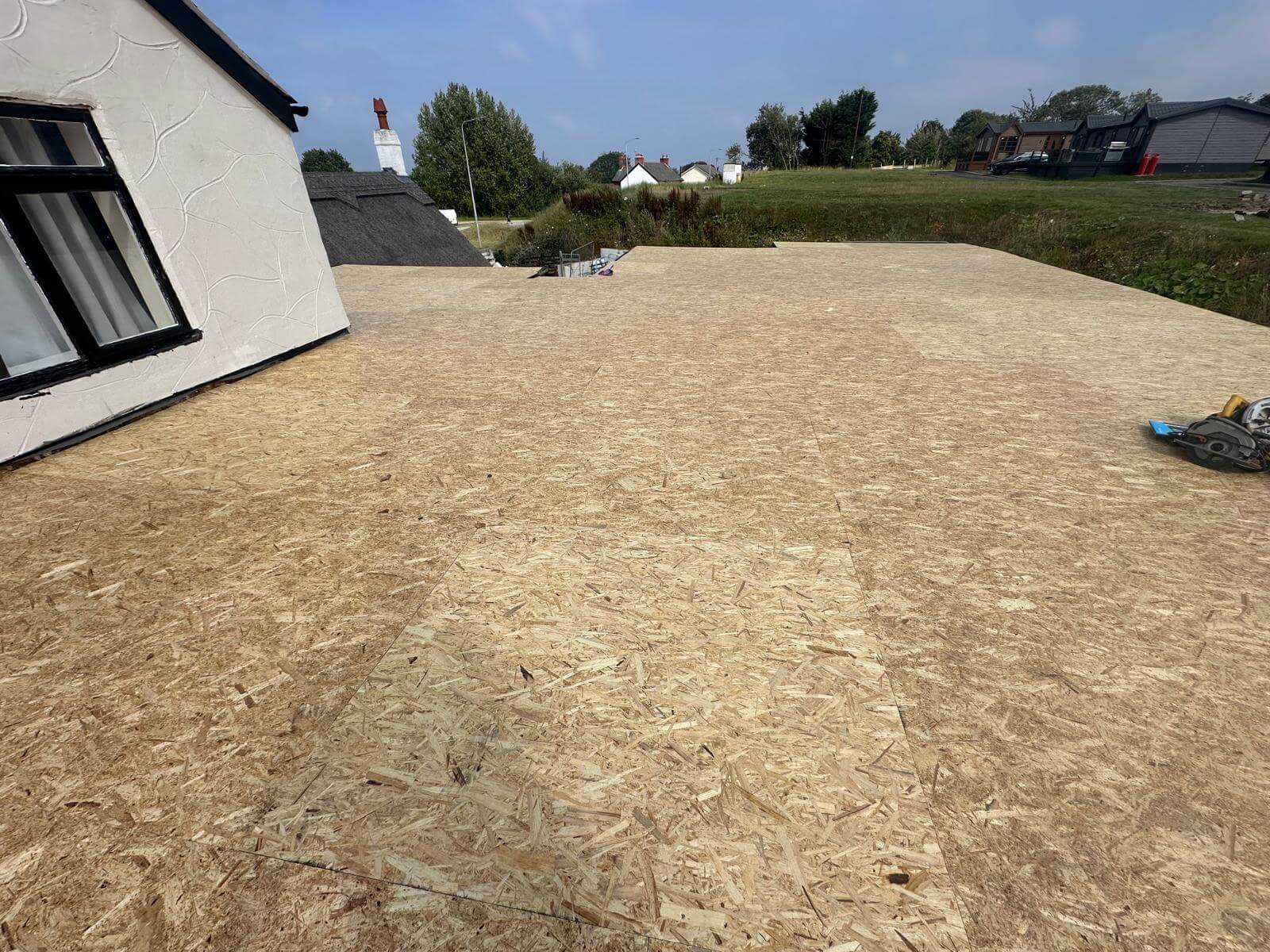
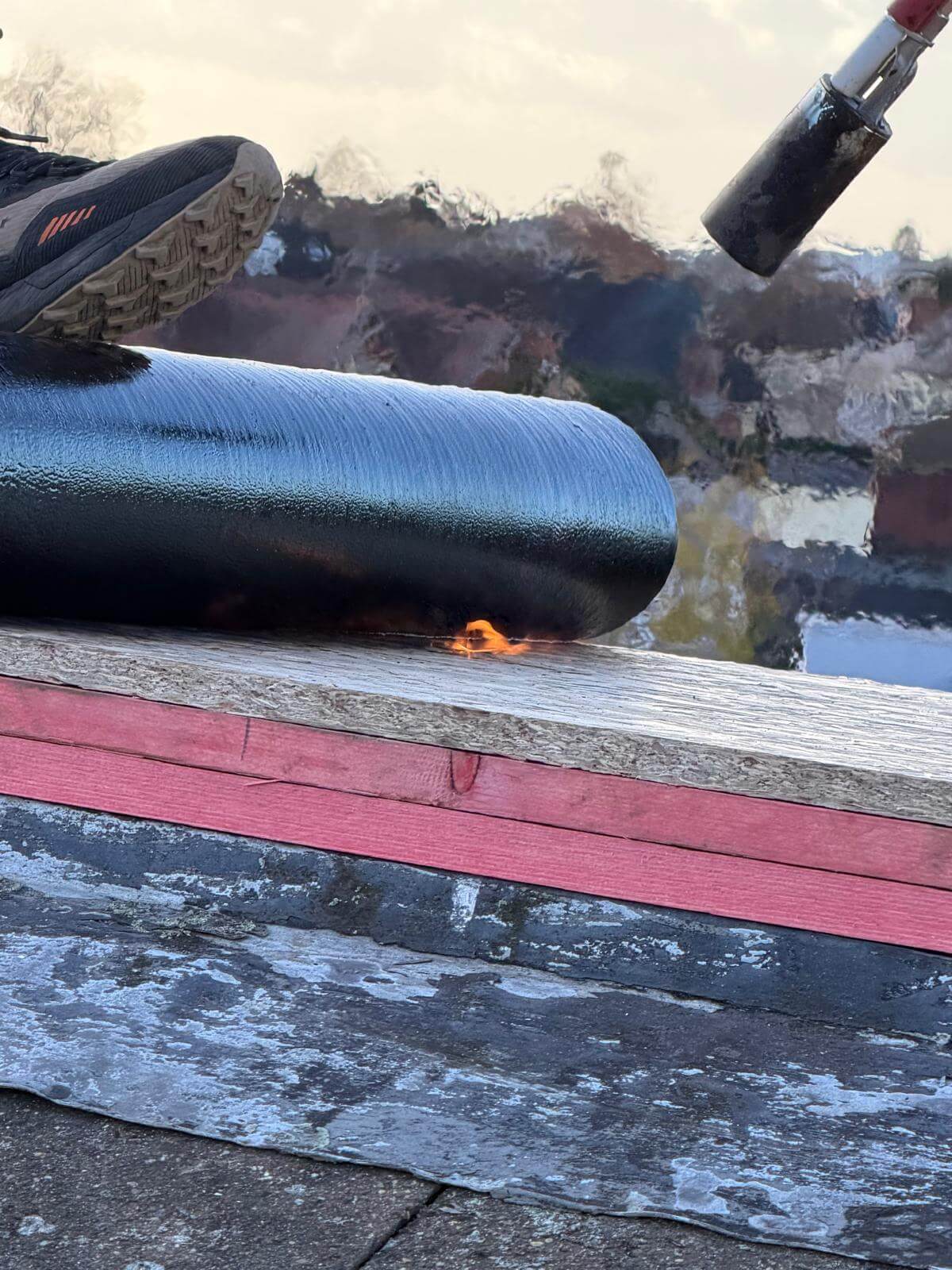
Hidden box gutters and valley troughs are the main failure points in butterfly roof configurations. We completely strip failed valley bases, inspect the underlying timber support boards for dry or wet rot, and install BS EN 12588 Code 5 or Code 6 milled sheet lead. Every trough is engineered with proper drip steps, expansion joints, and copper welt clips to handle thermal expansion without buckling or splitting.
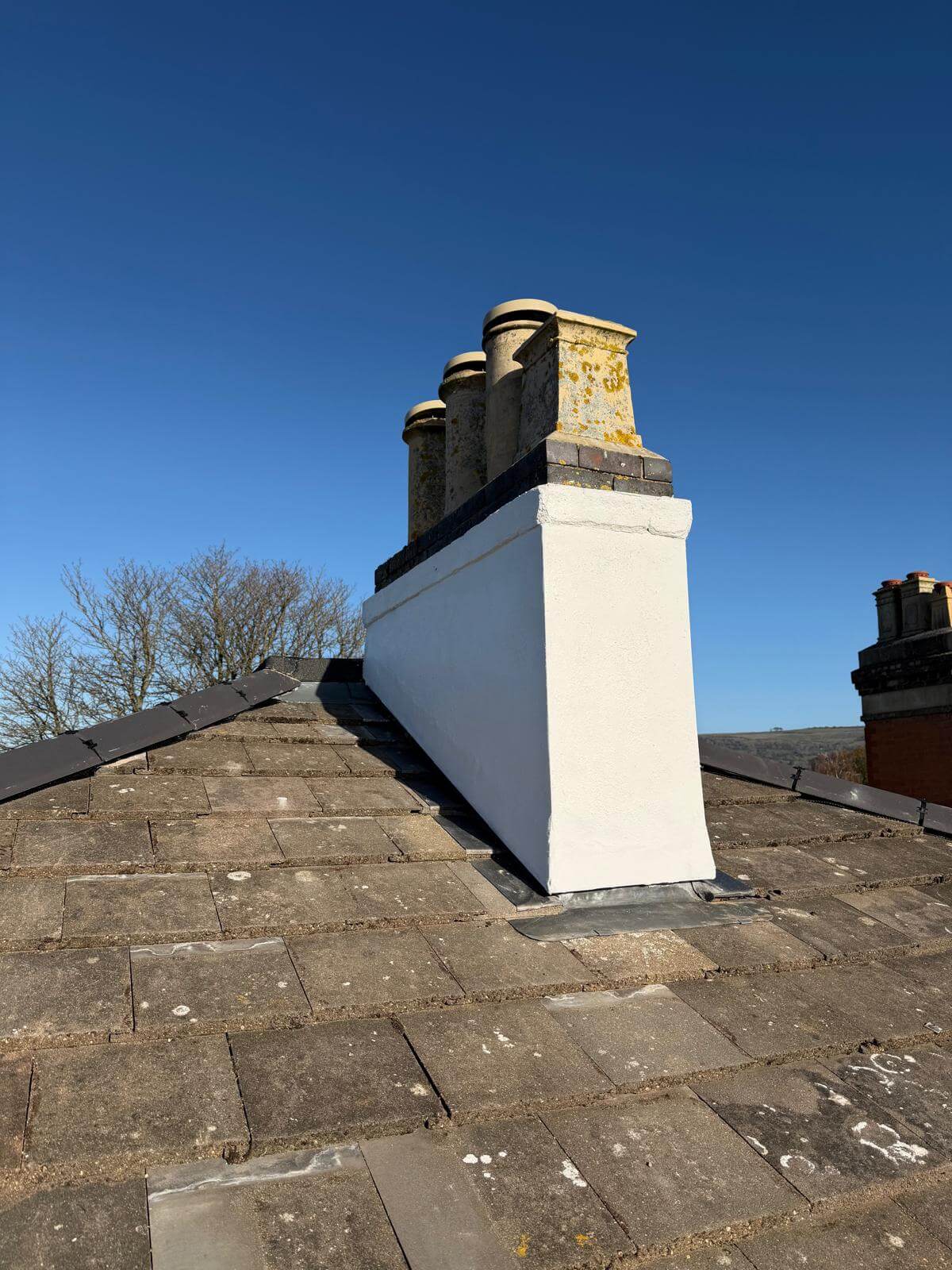
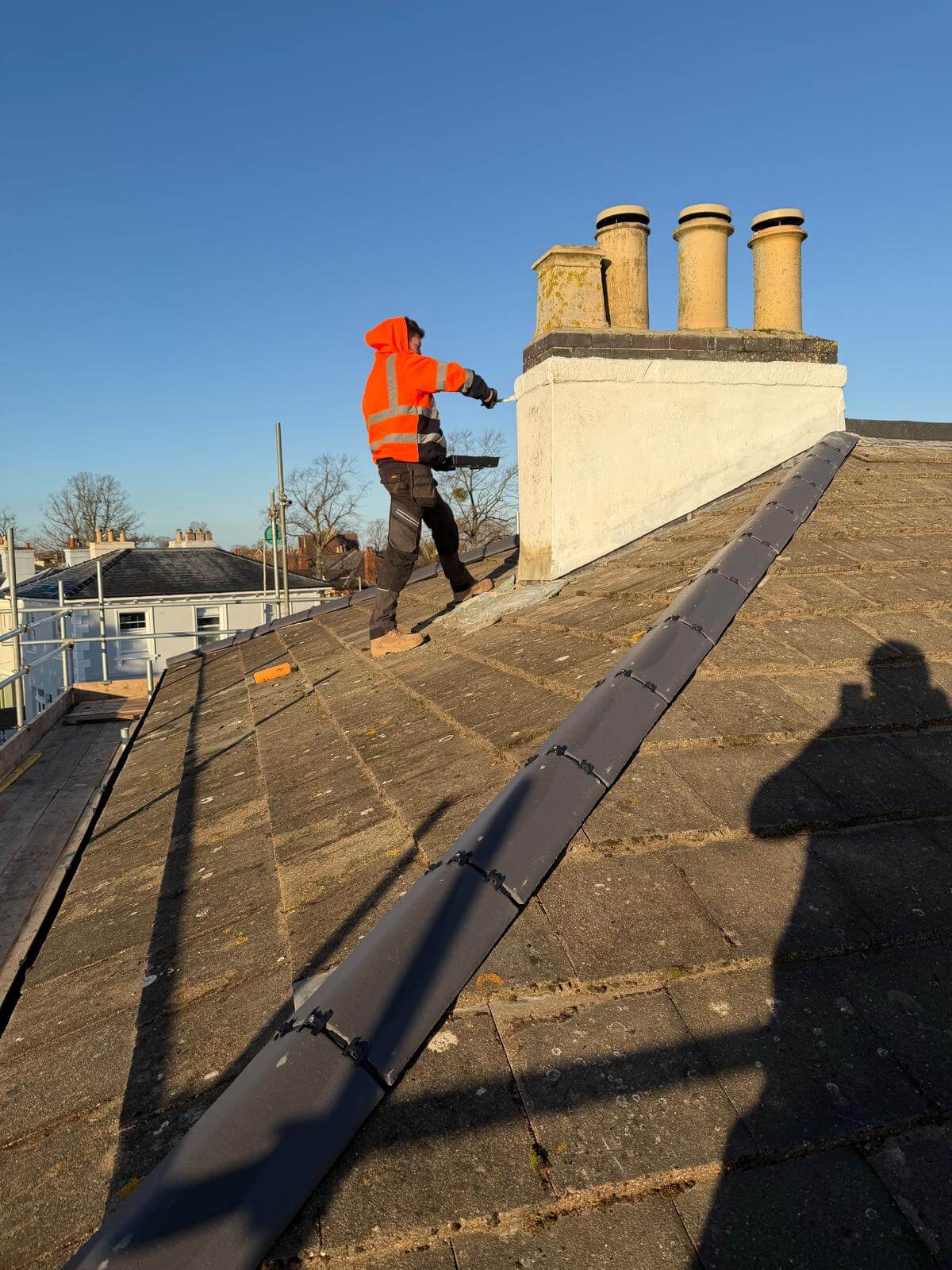
Cotham’s multi-flue chimney stacks sit high above four-storey drops, taking full exposure to winds funnelling up the Avon Gorge. We rake out incompatible Portland cement joints by hand to protect brick arrises, repointing exclusively with hydraulic lime mortar mixes. Where stacks have leaned or suffered core deterioration, we carefully take down the brickwork to a sound bed and rebuild using matched period facing bricks, new lead damp-proof trays, and traditional vented terracotta chimney pots.
To permanently stop damp penetrating through decorative parapet walls, we dress lead weathering caps over porous Bath stone copings. Formed in Code 5 lead with concealed stainless steel holding clips, these cappings protect soft stone masonry from freeze-thaw damage while preserving the historic front profile of the building.
We repair and replace heritage rainwater systems along visible street elevations. We restore original cast iron half-round and moulded ogee gutters with traditional red-lead putty joints, or install marine-grade, architectural cast-aluminium replicas that deliver authentic heritage styling with zero rust risk.
Cotham Brow & Cotham Hill: Steep gradients and tall three-storey terraces mean extreme wind uplift on exposed ridge lines. Chimney stacks along this ridge suffer high wind turbulence, requiring regular checks on top flaunching and pot stability.
Archfield Road, Highbury Villas & Colston's Yard: Dominated by mid-Victorian semi-detached and terraced villas with ornate timber eaves brackets and concealed gutters. Primary failure points are decayed valley timbers and internal gutter overflows.
Cotham Park & Elmgrove Road: Larger detached stone villas featuring multi-pitch roofs, bonnet hips, and lead-cheek dormer windows. Flashing fatigue around aging dormer windows is the most common cause of hidden bedroom ceiling damp.



Will Bristol City Council allow artificial slate or concrete tiles on a Cotham roof? If your property is within the Cotham and Redland Conservation Area (or is a listed building), using concrete tiles, artificial fibre-cement slates, or modern dry-verge plastic caps on visible roof slopes will almost certainly violate planning regulations and can result in enforcement action. Replaced coverings on visible pitches must match the original natural slate in material, size, and laying pattern. We guide you through compliant material specifications as part of our free survey.
Why is water leaking into the centre of my house when the front roof slates look fine? This is the classic symptom of a failed internal butterfly or valley gutter. In Victorian properties where two roof pitches drain toward a central hidden trough, rainwater tracks under the lead lining once it splits. Because the valley runs directly over the centre of the building, water drips straight into central hallways, stairwells, or landing ceilings rather than near outside walls.
Can you repoint my chimney stack in winter? Traditional lime mortar requires protection from frost and rapid drying to cure correctly. While emergency mechanical repairs and lead flashing replacements can be carried out year-round, structural lime repointing must be done under controlled temperatures or using specialized protective sheeting to ensure the mortar sets with full structural integrity.
How do you access four-storey townhouses safely without blocking Cotham's narrow streets? For minor tile replacements or quick emergency weathering, specialized mobile access platforms or targeted rope-access techniques can often be used. For full re-roofs or structural chimney rebuilds, we design compliant, pavement-licensed scaffolding that maintains clear pedestrian walkways and vehicle access along Cotham’s narrower residential roads.

Accessing the roofline of a three- or four-storey Cotham villa using ladders is impractical and dangerous, while erecting multi-lift street scaffolding just for a quotation costs hundreds of pounds.
Thomas Doherty inspects Cotham roofs using high-resolution 4K aerial drones:
Direct, close-up video of hidden internal butterfly valleys without setting foot on fragile slates.
360-degree high-definition inspection of chimney flaunching, pots, and party-wall lead step flashings.
Clear visual evidence of cracked Bath stone copings, slipped slates, and rotted rafter feet.
On-screen footage review directly with the homeowner before issuing an itemized, fixed written quote.

Whether you need historic lead valley restoration, a conservation-compliant slate overhaul, or an urgent inspection of a leaking chimney, speak directly with Thomas Doherty.
Telephone: 0117 370 9986
Office & Yard: 128 Stoke Lane, Bristol, BS9 3RJ
Coverage: Cotham, Kingsdown, Redland, Montpelier, and all surrounding BS6/BS2 districts.
Contact TD Roofing Contractors today to arrange your on-site 4K drone survey and detailed written quotation.


TD Roofing Contractors are your local roofing contractors in Bristol, providing 20+ years of expert service. From emergency roof repairs to new slate installations, we cover all BS postcodes with quality and integrity.
Copyright © 2026 TD Roofing Contractors LTD. All Rights Reserved.
Website by TME Digital